This is the flip side of the AI toolkit article. That piece assumes the technology keeps getting better and more useful. This one asks what happens to a household that leans on it when it simply isn't there.
A week-long national internet outage is very unlikely. Smaller versions happen all the time, though. Your broadband drops for two days, a bank's app goes down on a Friday, or a power cut takes the router with it. You prepare for all of them the same way, so think of this as a check on how much of ordinary life quietly assumes a connection, rather than a forecast.
In short, three things actually fail: payments, phone calls on digital landlines, and any information you only keep online. Three cheap habits cover most of it: a modest amount of cash, a charged mobile phone, and paper copies of the few details you'd really need.
The UK-specific thing most people have missed
Britain is part-way through retiring its old copper telephone network. Openreach has set 31 January 2027 as the date the analogue landline system is switched off, and home phones are moving onto digital landlines that run over your broadband.
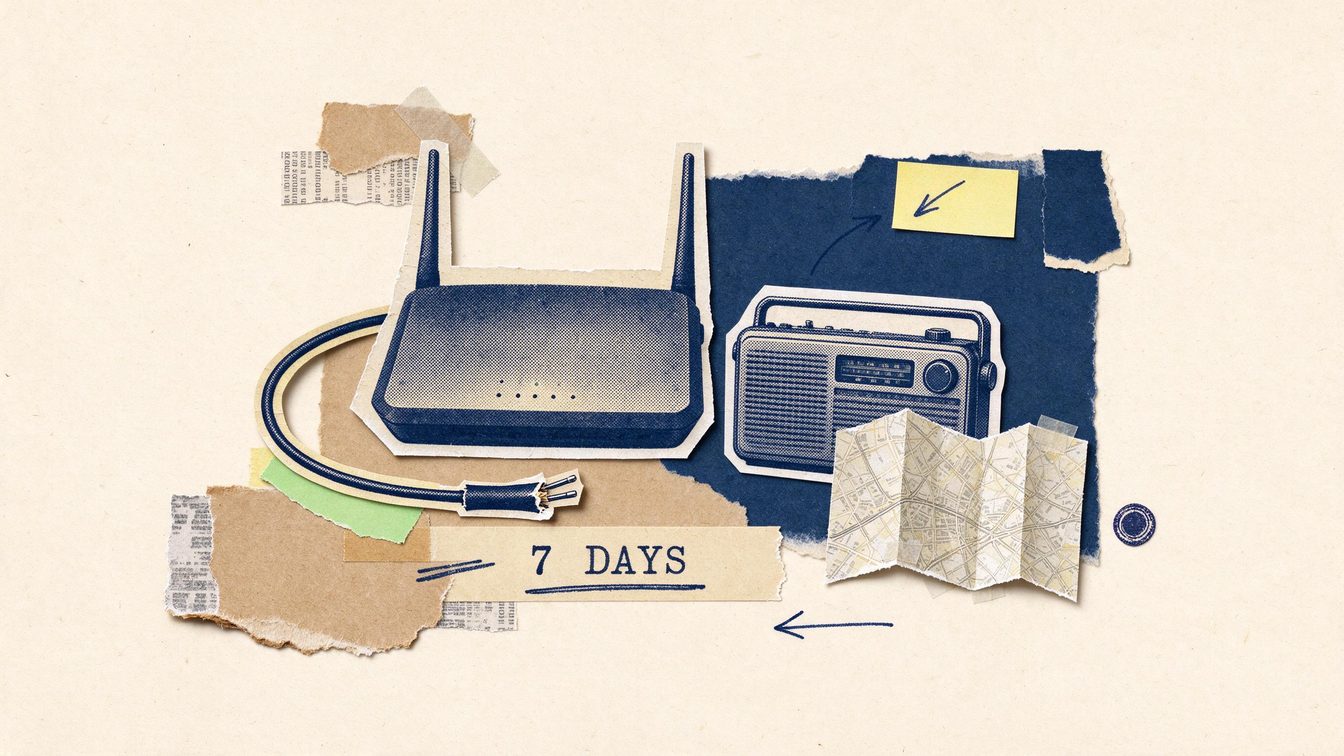
The old analogue line drew its power from the phone line itself, so it kept working in a power cut. A digital landline runs through your router, so when the electricity goes, your home phone goes with it, unless there's a backup battery.
If everyone at home has a charged mobile, that's a small change. It's a bigger one for:
- people who rely on the landline because they have no mobile, or no mobile signal at home
- anyone with a telecare alarm or health pendant connected to the phone line
- older relatives who have always assumed the landline "just works"
Ofcom requires phone providers to protect access to emergency services for at least an hour during a power cut, usually with a battery backup unit or a phone that can fall back to the mobile network, and to provide it free of charge to people who depend on their landline. Providers have also agreed not to move telecare users until a compatible solution is confirmed.
If you, or someone you look after, depends on a landline or uses a telecare alarm, contact the phone provider before the line is switched. Ask about a battery backup and whether the alarm has been confirmed compatible. It costs nothing, and it's the one thing on this page with a deadline.
What actually stops working
The list is shorter than most people expect, and a couple of items on it are surprising.
- Card payments, mostly. Card terminals need a connection. Some can take payments offline and process them later, but that varies by retailer and isn't something to count on. Cashpoints depend on bank networks too.
- Online and app banking: transfers, balance checks and anything you do through an app.
- Digital landlines in a power cut, as above. Mobile calls still work if the mobile network is up.
- Messaging apps. WhatsApp, iMessage and the like need data. Ordinary text messages run over the mobile network itself, so they keep working, which is worth remembering.
- Work, if your job lives in the cloud.
- Navigation, unless you downloaded maps in advance. GPS still works without data; the map underneath is what disappears.
- Smart home devices that rely on a cloud service, such as some heating controls, doorbells, locks and lights. Whether yours keep working locally depends on the product.
- Information you only have online: insurance policy numbers, your GP's details, or a relative's number you've never had to know because it lives in your contacts.
What still works
- Cash, wherever it's still accepted.
- 999 from a mobile. It connects to whichever network is available at that moment, not just your own provider's.
- Ordinary texts and calls, if the mobile network is up.
- Emergency Alerts. The UK system uses cell broadcast from mobile masts, so it doesn't need mobile data or an internet connection, though it does need the mobile network itself to be working.
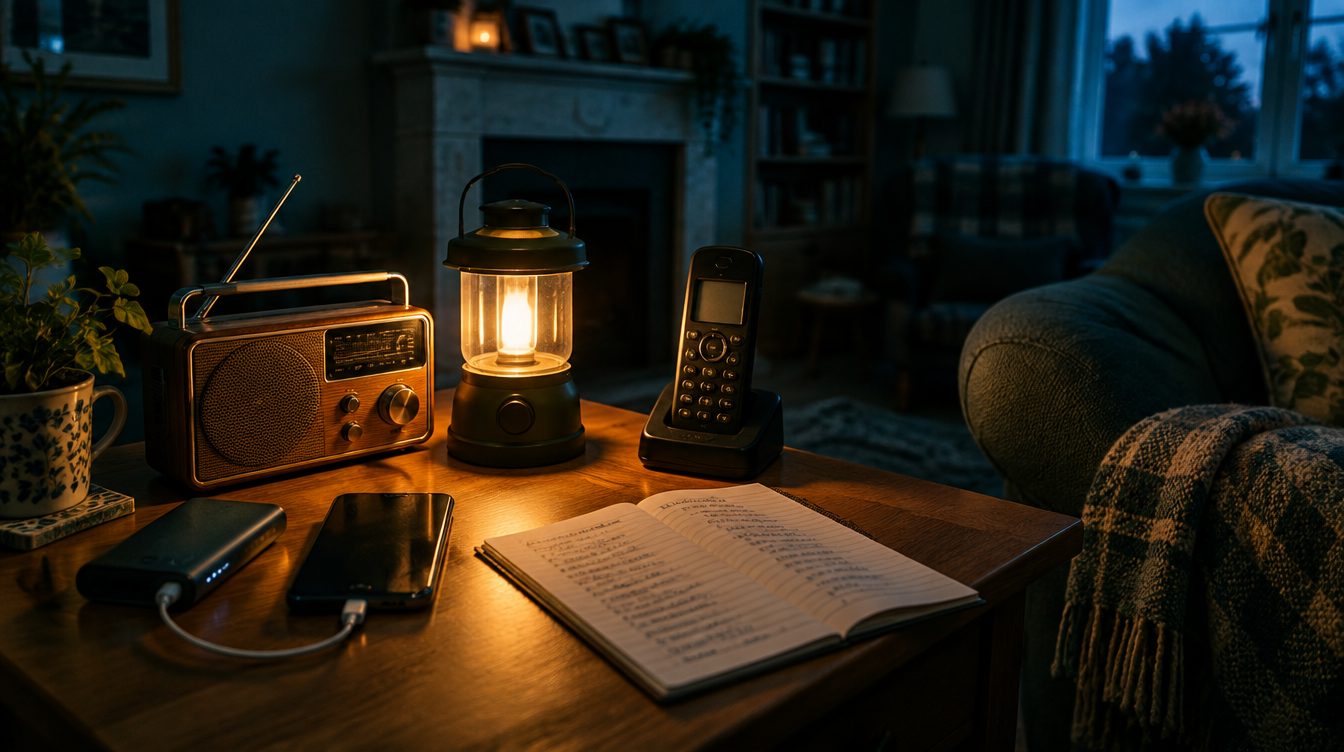
- Broadcast radio. A battery or wind-up radio is the most reliable news source you'll have.
- Paper, which never needs a signal or a charge.
Sensible preparation
None of this needs a big spend. Most of it takes an afternoon.
Keep a modest amount of cash at home
Keep enough for a few days of essentials (food, fuel, a taxi) in small notes, because shops may be short of change too. Keep it somewhere sensible and don't advertise it. The point is having one way to pay that doesn't need a network.
Write the important numbers down
gov.uk's Prepare campaign recommends keeping key numbers on paper. One sheet does it:
- 105 for power cuts (03457 643643 in Northern Ireland)
- Your GP, pharmacy and NHS 111
- Family and close friends, the numbers you'd need without your phone's contacts
- Your insurer, bank and energy supplier, with policy and account numbers
- A list of regular medication
Keep offline copies of what matters
Important documents shouldn't live only in one cloud account. Keep copies you can reach without a connection, on a device, a USB drive or paper, for insurance policies, key identity documents and anything medical. The same goes for photos and work you'd hate to lose: if your only copy sits in one cloud account, losing access to that account loses the lot.
Download maps before you need them
Most map apps let you save an area for offline use. Do it for your home area and anywhere you travel often. A paper road atlas in the car never runs out of battery.
Keep phones charged
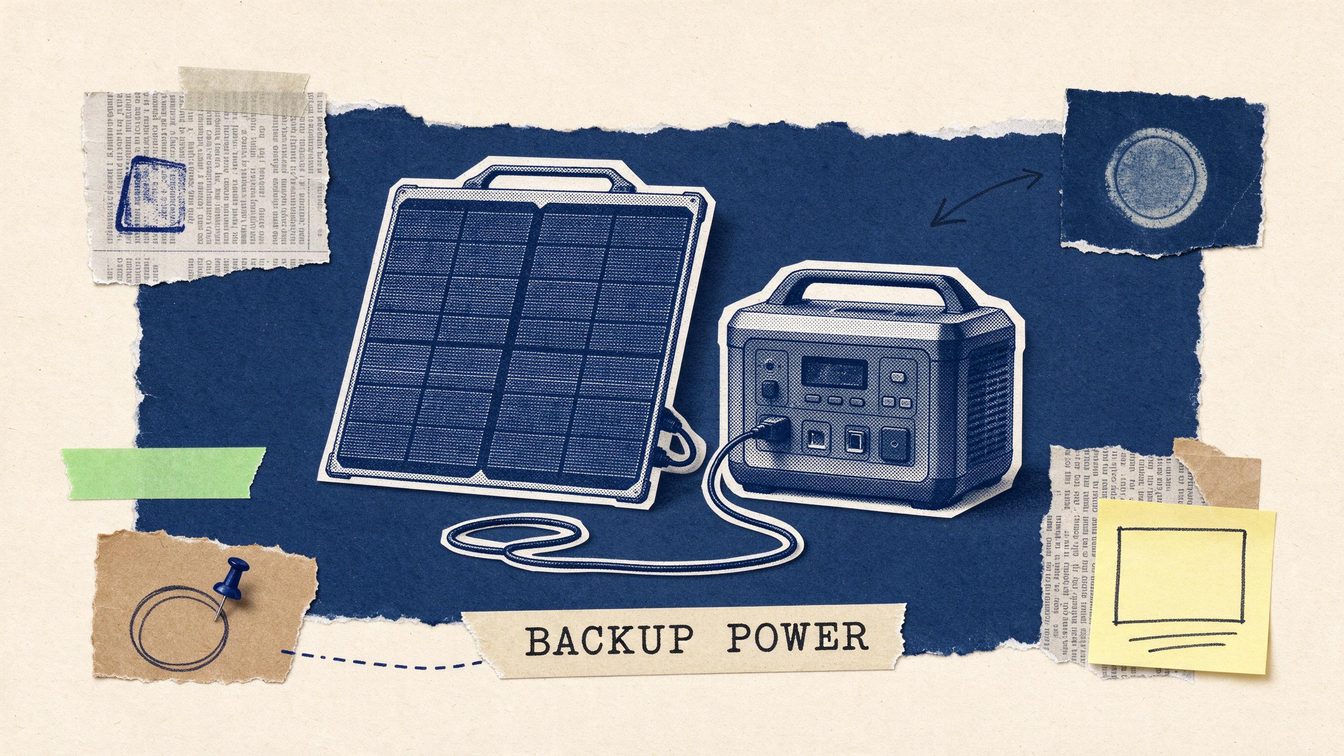
A charged mobile is the fallback for almost everything above. A power bank or two, kept topped up, covers most short outages. For longer ones, a portable power station keeps phones, a router and lights running; how to size one is in backup power and solar.
Know how your smart home fails
For each connected device, find out what happens when the internet goes. Does the heating keep its schedule? Does the smart lock still open with a key? Do the lights work from the switch? Better to find out on a quiet evening than in the middle of an outage.
 Offline-ready checklist
0 of 9 done
The AI toolkit worth paying for
This article plans for the technology not being there. The companion piece assumes it keeps getting better, and asks which of it is worth paying for.
Read itFrequently asked questions
Will my landline work in a power cut?
If it's a traditional analogue landline, usually yes, because it draws power from the phone line. If it's a digital landline running through your broadband router, no, unless there's a battery backup.
Britain's analogue network is being switched off, with Openreach's cut-off set for 31 January 2027, so most home phones are moving to digital. Ofcom requires providers to protect emergency calling for at least an hour in a power cut, and to do so free of charge for people who depend on their landline.
Can I still call 999 if the internet is down?
From a mobile phone, yes, as long as a mobile network is available. A 999 call from a mobile connects to whichever network is available at that moment, not only your own provider's.
From a digital landline, only if your broadband and power are working, or if you have a battery backup. That's why a charged mobile phone is the universal fallback.
What should I do if I have a telecare alarm?
Contact both your phone provider and the alarm supplier before your line is moved to digital. Ask whether the alarm has been confirmed compatible and whether you're eligible for a free battery backup. Providers have agreed not to switch telecare users until a working solution is in place, but they need to know you have one.
How much cash should I keep at home?
Enough to cover a few days of genuine essentials (food, fuel, a taxi if you needed one) in small notes, since shops may be short of change. There's no official figure, and it depends on your household. The point is having one payment method that doesn't depend on a network, not holding large sums.
Do text messages work without the internet?
Ordinary SMS text messages do, because they run over the mobile network rather than a data connection. WhatsApp, iMessage and other app-based messaging need data and will stop. If mobile data is down but the network is up, plain texts and calls are the fallback.
Will UK Emergency Alerts reach me if the internet is down?
Usually, yes. The UK's Emergency Alerts system uses cell broadcast from mobile masts, so it doesn't depend on mobile data or an internet connection. It does need the mobile network itself to be working, and your phone needs to be switched on.
Where to go next
- The AI toolkit worth paying for: the companion piece to this one.
- Backup power and solar: keeping phones and the router running.
- How long could you feed your household?: the same planning for food and water.
- AI is making scams more convincing. Here's how to protect your accounts: keeping criminals out of your accounts, and getting yourself back in.
Sources & methodology
- House of Commons Library: the switch to digital landlines: background to the copper network retirement and power-cut resilience concerns.
- Which?: Digital Voice and the landline switch-off: what the change means for households.
- Ofcom: the requirement that providers protect emergency-service access for at least an hour in a power cut, free of charge for those who depend on their landline.
- gov.uk Prepare: keeping key numbers on paper, including 105 and the Northern Ireland equivalent.
The 31 January 2027 date is Openreach's published cut-off for the analogue network. It has been moved before, as the industry paused migrations over concerns about telecare users, so check with your provider for the timing that applies to your line.