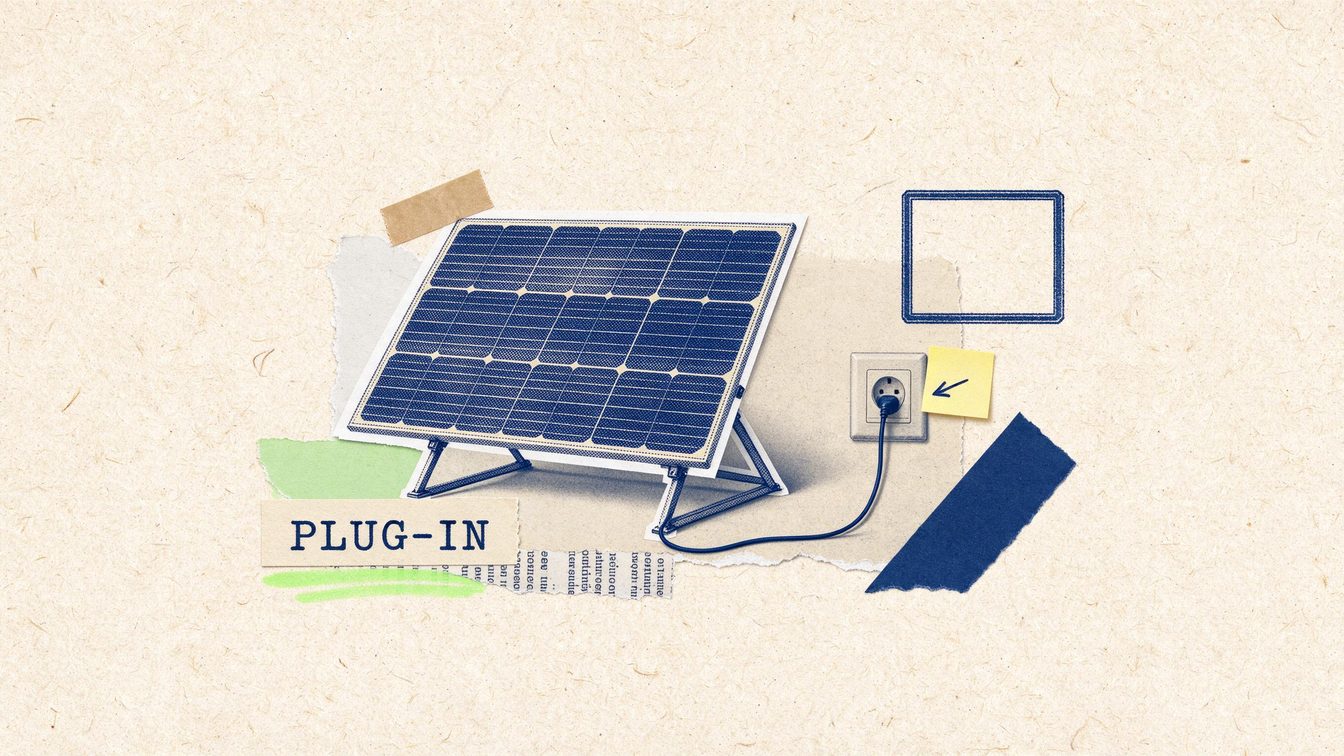
"Plug-in" suggests there's nothing to check. The UK's electrical safety charity says otherwise. Electrical Safety First's headline message on plug-in solar is that plug-in doesn't mean no safety checks are required, and that the thing to check is one most of us have never looked at: the safety switches in your fuse box.
So, before you buy, have an electrician registered with a competent persons scheme look at your electrics, particularly in an older home. Make sure your RCD (the safety switch that cuts the power if something goes wrong) is a type that copes with solar, plug the kit straight into a socket, buy a kit that's on the approved register from a reputable retailer, and register it. The rest of this guide explains each step.
Two views, both worth hearing
The government says the legal changes followed rigorous, independent safety testing covering all key electrical elements, which it says shows compliant panels are safe and compatible with UK wiring. Electrical Safety First, a charity dedicated to reducing deaths, injuries and fires from domestic electrical accidents, agrees the kit is now legal but says there are unresolved concerns about how plug-in solar affects certain RCDs, and that not every home is currently suitable.
You don't have to pick a side. The practical reading is that the kit is designed for UK wiring, and that your particular house might not be. A check before you buy is the way to find out, and it costs far less than finding out afterwards.
- Electrician firstElectrical Safety First advises a check before you buy
- RCD typeType AC is unsuitable; A, B and F are listed as suitable
- Socket rulesStraight into a socket, no extension leads or adaptors
- Register itA legal requirement once it's running
Why your fuse box matters
Most UK homes, Electrical Safety First explains in its consumer guide, were designed for electricity flowing one way: from the socket to the appliance. A plug-in solar kit puts energy into the circuit. The charity warns this could damage existing wiring and protective devices, and that DC residual current, which plug-in solar is known to produce, can stop certain types of RCD from tripping when they should.

That matters because an RCD is what reduces the risk of electric shock. If it fails to trip, you lose that protection without knowing.
What kind of protection do you have?
- Modern consumer unit with RCDs or RCBOs. An RCD or RCBO (a combined RCD and circuit breaker) has a test button, which a plain circuit breaker lacks. Its type matters.
- Old-style fuses (rewireable or cartridge). The guide says these aren't impaired by plug-in solar, but your home lacks the protection RCDs and RCBOs give. Electrical Safety First strongly advises an inspection before buying or using plug-in solar.
Check 1: the RCD type
The guide says the type can often be identified from a symbol on the front of the device (pictured in the guide). Type AC is not designed or tested to work with any DC residual current and is unsuitable for plug-in solar. Types A, B and F are listed as suitable. Electrical Safety First's web advice puts it plainly: homes with Type AC RCDs should not use plug-in solar without first upgrading to at least a Type A bidirectional RCD on those circuits. Don't confuse the RCD "type" with the B, C or D marking on a circuit breaker, which means something else.
Check 2: is it suitable for two-way flow?
Most RCDs and RCBOs are "unidirectional". The guide says these are not suitable, because they might fail to trip in a fault and could be permanently damaged with no sign to the homeowner. Few can be identified as bidirectional by eye; some manufacturers add a suffix such as "BD" or "Bi-dir", but not always.
Never open the consumer unit. Electrical Safety First says never to remove the cover to find this information. If you can't tell from what's visible on the front, write down the manufacturer and model number from the front and ask the manufacturer or an electrician. Even better, let the electrician look.
If your protection isn't suitable, a registered electrician can advise on changing the device or upgrading the consumer unit. That's not a DIY job. You can find one through a competent persons scheme, or through TrustMark, which the Energy Saving Trust recommends.
The socket and the circuit
- Straight into the wall. Not via extension leads, cable reels, multiway adaptors, travel adaptors or plug-in RCD adaptors, which Electrical Safety First says can overheat and overload.
- The right circuit. The Energy Saving Trust says the socket must be on a circuit that doesn't also supply lighting or hard-wired appliances such as a boiler or cooker. It suggests switching off one breaker at a time to see what's affected, and asking an electrician if unsure.
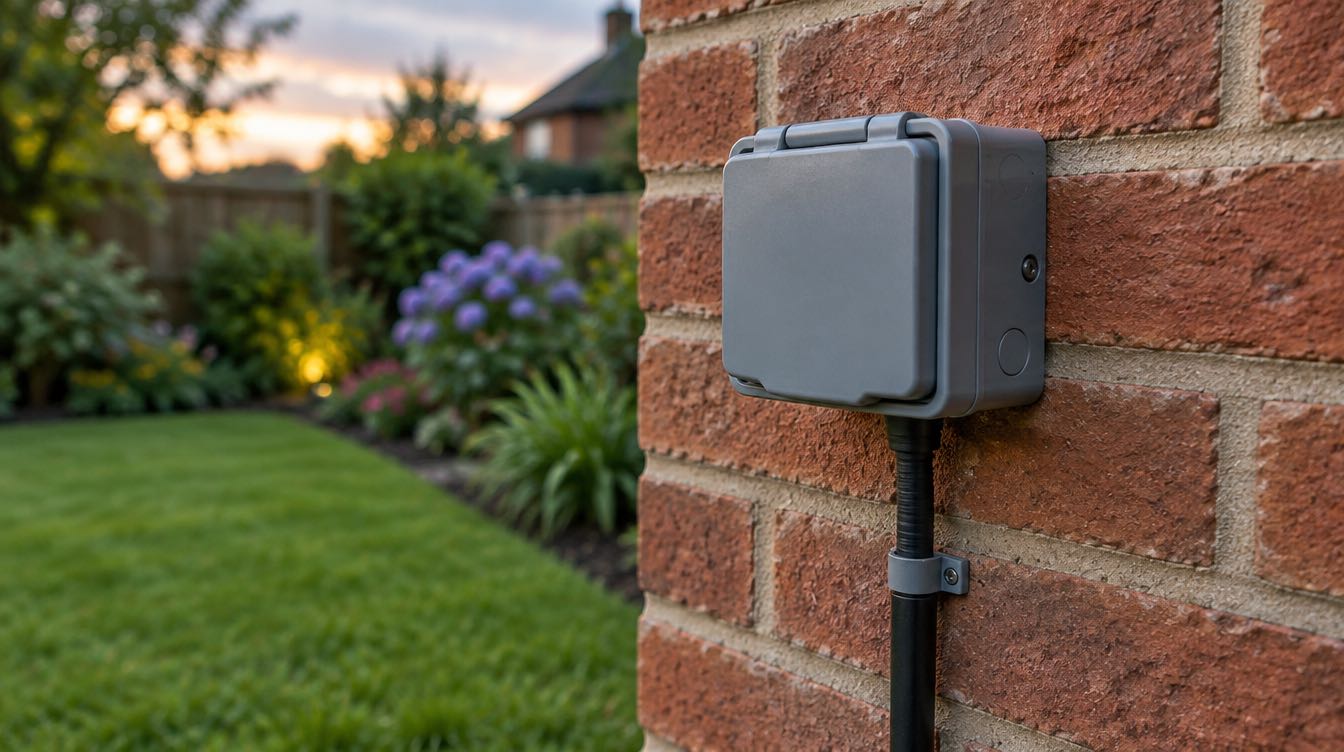
- Outdoors. An outdoor socket needs to be weatherproof, at least IP65, and fitted by a qualified electrician, according to both the Energy Saving Trust and London Fire Brigade.
- One device per home, of up to 800 W. More than one could reduce the effectiveness of protective devices.
- No battery. Kits with integrated batteries aren't covered, and London Fire Brigade recommends not connecting plug-in panels to batteries for later use.
Already have solar panels?
The two main sources give different levels of caution, so take the stricter one. The Energy Saving Trust says that adding a plug-in kit to a home with rooftop solar or a battery is usually possible, but to speak to the original installer or an electrician, and that you may need to tell your network operator if your export goes over a certain level. The ENA's registration site is firmer: if you already have a 3.68 kW G98 solar system, you must use a qualified installer to apply for G99 approval, and any additional generation must be wired in and not a plug-in installation. Ask your installer before you buy.
Buying: the register and the retailer
- Check the exact model on the Energy Networks Association's device register. If it isn't on the list, it isn't a compliant kit.
- Buy from a reputable retailer. Electrical Safety First urges shoppers to stick to reputable high-street retailers and their websites, and to avoid third-party sellers on online marketplaces, because those platforms currently aren't legally responsible for the safety of goods sold through them.
- Look for UKCA or CE markings, as London Fire Brigade advises; poor-quality or counterfeit products may overheat or fail.
Registering your kit
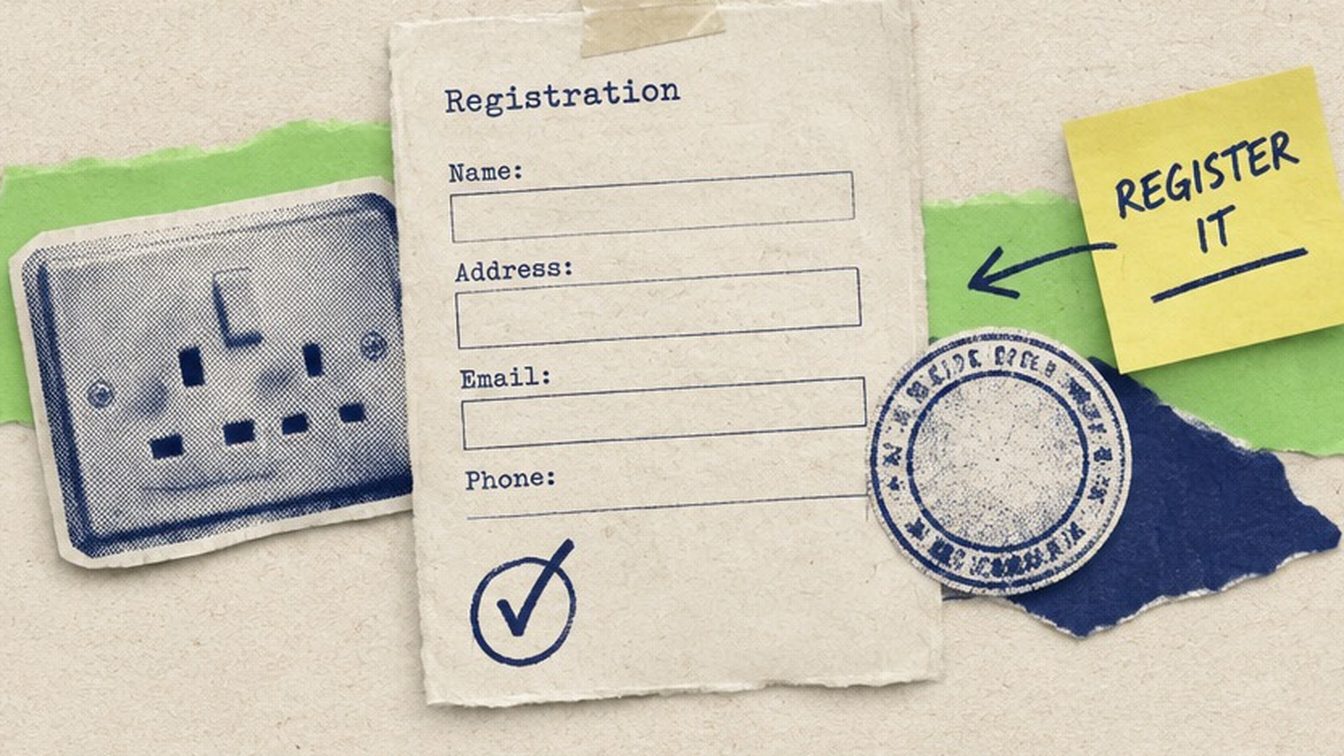
Registration isn't optional. The ENA's UK Plug-in Solar Registration site says registering your device is a legal requirement; it helps your network operator understand where the devices are connected and make sure the local network can accommodate them. The site is operated by the Energy Networks Association, and the process is four steps:
- Verify your email with a one-time code.
- Confirm your address by entering your postcode and choosing it from the list.
- Select your device from the list of compliant devices.
- Submit. A notification is sent automatically to your network operator.
On timing, sources differ slightly. The ENA's site says to register once you have the device and know the address where it will be installed. London Fire Brigade's advice talks about telling your network operator within 28 days after installation. The simple way to satisfy both is to register as soon as you have the kit, before you switch it on. The Energy Saving Trust says you get an on-screen confirmation but no confirmation email, so keep a screenshot.
Once it's running
- Test your protection every six months by pressing the test button on your consumer unit, during the day while the panels are generating, according to the Energy Saving Trust. If it doesn't trip, unplug the kit and call an electrician.
- Stop using it immediately and report it if you notice a burning smell, overheating, buzzing, visible damage or repeated tripping, says London Fire Brigade. If there's a burning smell, call 999.
- Don't tamper with cables, plugs or the inverter, and protect cables from damage.
 Plug-in solar: readiness checks
0 of 9 done
The two-futures view
In the optimistic future the grid stays reliable and plug-in solar is a small, steady saving, but only if it's installed safely. In the other future, a power cut reminds you it switches off with the grid, so it isn't backup power. In both, the money you'd spend on an electrician's check is money well spent: it protects you whichever way things go. If you want to work out whether the kit is worth it at all, start with the main guide.
Plug-in solar is now legal in Britain. Is it worth it for your home?
This article covers whether your home is ready. The main guide covers what a kit saves, the rules it must meet, and why it can't help in a power cut.
Read itFrequently asked questions
Do I need an electrician before buying plug-in solar?
Electrical Safety First recommends it: that homes have their electrical installation assessed by a competent electrician registered with a competent persons scheme before buying or using a plug-in solar system, particularly in older properties or where the condition of the installation is unknown. The government says compliant kits are safe and compatible with UK wiring, so this is a precaution, but a sensible one.
What is a Type AC RCD, and why does it matter?
An RCD is a safety switch that reduces the risk of electric shock. Type AC is the oldest type and isn't designed or tested to cope with any DC residual current, which plug-in solar is known to produce. Electrical Safety First says homes with Type AC RCDs shouldn't use plug-in solar without first upgrading to at least a Type A bidirectional RCD on those circuits.
Can I use plug-in solar with an old fuse box?
Electrical Safety First says rewirable or cartridge fuses aren't impaired by plug-in solar, but your home won't have the protection that RCDs provide. It strongly advises having the installation inspected by a competent electrician before buying or using plug-in solar.
Do I have to register plug-in solar?
Yes. The ENA's registration site says it's a legal requirement. You register online with a one-time email code, your address and your device, and a notification goes to your network operator. Do it as soon as you have the kit, before you switch it on.
Can I add plug-in solar if I already have rooftop panels?
Check first. The Energy Saving Trust says it's usually possible but to ask your installer or an electrician, while the ENA's registration site says that with an existing 3.68 kW G98 system you must use a qualified installer for G99 approval and any additional generation must be wired in, not plug-in.
Is it safe to buy plug-in solar from an online marketplace?
Electrical Safety First advises against it: it urges shoppers to use reputable high-street retailers and their websites, because online marketplaces currently aren't legally responsible for the safety of goods sold by third-party sellers. Always check the exact model on the ENA register.
Can I connect a battery to plug-in solar?
Not under the current rules. Kits with integrated batteries aren't covered, and London Fire Brigade recommends not connecting plug-in panels to batteries to store energy for later use.
Where to go next
- Can renters and flat owners use plug-in solar?: permission, planning and balconies.
- Plug-in solar is now legal in Britain. Is it worth it for your home?: what it saves and why it can't help in a power cut.
- Backup power and solar: how to size it right: for the days the grid is off.
Sources & methodology
Everything below was read on the original pages on 30 September 2026. Electrical advice depends on your own installation: use a qualified electrician for anything inside your consumer unit.
- "Plug-in doesn't mean no safety checks", RCD and RCBO types, DC residual current, bidirectional flow, fuses, extension leads, marketplace sellers, one home one device, how to identify RCDs: Electrical Safety First, Plug-in solar panels consumer guidance (August 2026) and its plug-in solar web advice.
- "Rigorous, independent safety testing" and compatibility with UK wiring: DESNZ press release, 26 August 2026.
- Circuit rules, IP65, electrician and TrustMark advice, existing rooftop solar, testing your RCD every six months, on-screen confirmation: Energy Saving Trust, plug-in solar checklist and guide.
- Registration steps, legal requirement, timing and existing G98 systems: UK Plug-in Solar Registration, operated by the Energy Networks Association. Approved kits: ENA device register.
- IP65 sockets, UKCA or CE markings, batteries, the 28-day notification, emergencies: London Fire Brigade, plug-in solar safety advice.
No product has been tested by What If Hub for this article, and What If Hub earns no commission from anything mentioned. See the commercial policy.