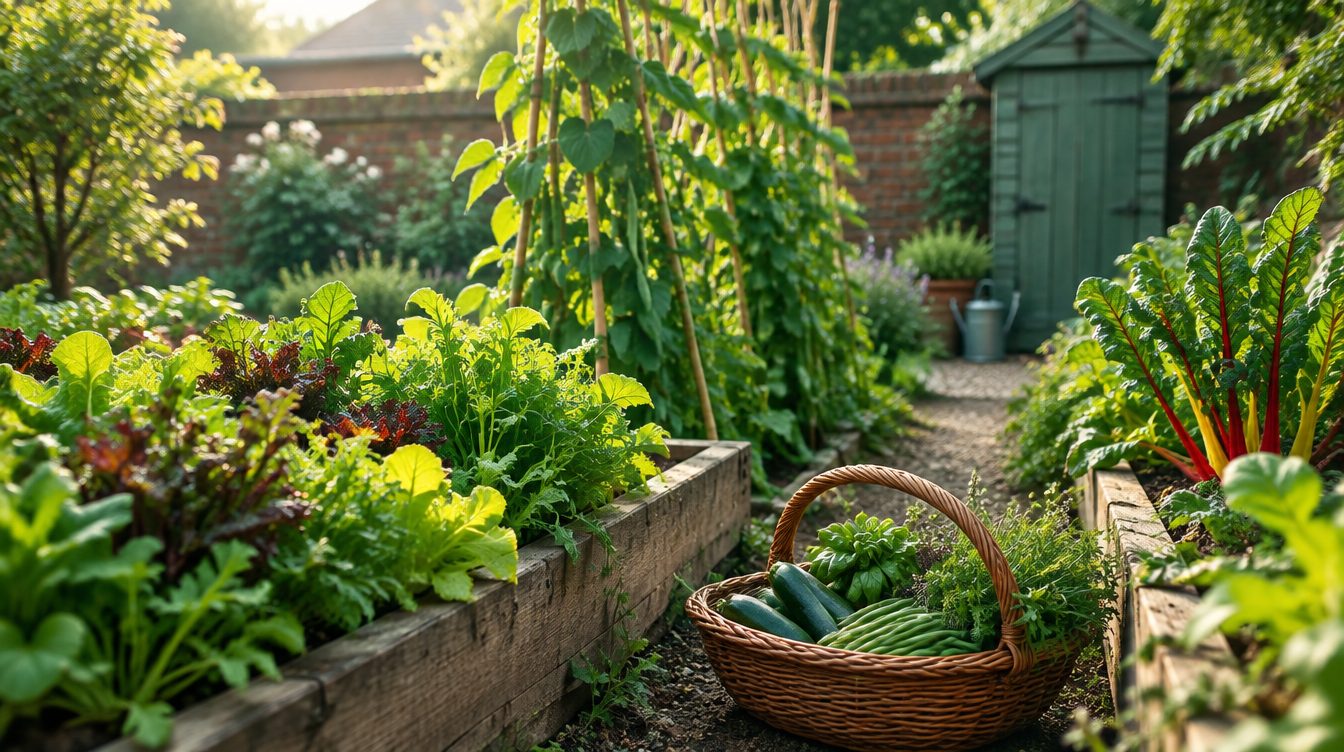
Growing all your own food is a fantasy for almost everyone in the UK. A typical back garden can't feed a household, and people who claim otherwise usually aren't counting their own time. That's the wrong target anyway. The useful question is smaller: which few things are worth growing here, in the space you actually have, that save real money and keep producing? The list is shorter than the seed catalogues would have you believe, and it works on a windowsill as well as on an allotment.
Grow what's expensive to buy, not what's easy to grow
The biggest mistake is growing staples. Maincrop potatoes, onions and carrots are cheap, stored on an industrial scale and on sale all year. Give your one sunny bed to something you can buy for pennies and you'll soon decide growing food "isn't worth it".
The sums change when you grow things that are expensive, perishable or both, the crops supermarkets struggle to sell cheaply because they don't travel or keep well.
Worth the space in a UK garden
- Cut-and-come-again salad leaves are the best value per square metre by a long way. A bag of leaves costs more than a packet of seed that'll keep producing for months. Sow a short row every few weeks from March, cut the outer leaves and let the plant regrow.
- Soft herbs like parsley, coriander, chives and mint. Supermarkets sell them in tiny amounts at high prices and they wilt in days. A few pots on a windowsill replace nearly all of that.
- Climbing and runner beans grow upwards, so they take up almost no ground, and they crop heavily over a long season. They're one of the best returns you'll get from a small UK garden.
- Courgettes are famously prolific. Two plants will give you more than most households can eat, which is a nice problem to have if you've got a freezer.
- Chard and kale really are hardy through a British winter. They keep standing and producing when almost nothing else does, which is exactly when fresh greens cost the most.
- Tomatoes are worth it, with a catch. Outdoors in the UK they're a gamble except in the warmest spots and summers. In a greenhouse, a polytunnel or against a sunny south-facing wall, they're excellent.
Usually not worth it
- Maincrop potatoes, onions and carrots are cheap to buy, hungry for space and in the ground for ages. First early potatoes in a bag are different: they taste better and clear the space by midsummer.
- Sweetcorn is borderline in most of Britain. It needs more reliable warmth than we get, and takes up a lot of room for a small crop.
- Anything that needs steady heat, like aubergines, peppers and melons, is possible under glass but fussy, and rarely the best use of limited greenhouse space.
The rule of thumb. If it's cheap in the supermarket, travels well and keeps for months, buy it. If it's expensive, goes off quickly or tastes dramatically better fresh, grow it.
Match the plan to the space you actually have
Most growing advice assumes you have a garden. Plenty of British households don't, so here's how it scales down.
- A windowsill. Herbs and salad leaves, all year round on a bright sill. It costs very little, takes minutes a week, and replaces some genuinely pricey shopping.
- A balcony, doorstep or yard. Add pots of salad, a grow bag of tomatoes somewhere sunny and a potato sack. Containers dry out fast, and it's lack of water that kills container crops far more often than the cold.
- A small garden. Now beans, courgettes and winter greens start to make sense. Two or three raised beds handle this easily; you don't need to dig up the lawn.
- An allotment. A standard 10-rod plot is around 250 square yards. That's a serious commitment, realistically several hours a week in season. Council waiting lists in many areas run to years, so if you think you might ever want one, get on the list now and decide later. Lots of councils also offer half plots, which suit most households much better than a full one.
The UK growing year, honestly
British seasons are what most online growing advice ignores, because so much of it is written for somewhere warmer. Roughly, the year goes like this:
- In February and March, sow indoors on windowsills, chit first early potatoes and order seed.
- April and May are the main sowing window. Don't plant tender crops out until the frost risk has passed where you live, usually mid-May in the south and later further north.
- June to August brings the peak harvest, and peak watering. This is when the gluts arrive and preserving starts earning its keep.
- In September and October, harvest and store, and sow overwintering greens and garlic.
- From November to January, chard, kale and leeks keep going. Everything else is planning and improving the soil.
Preserving: freeze first, and be careful with the rest
Preserving is how a glut turns into food you actually eat in February. It's also the part of home food production where safety really matters, so it pays to be careful rather than enthusiastic.
Freezing: the default, and the safest
For most households a freezer does more than every other preserving method put together. It's forgiving, it needs no special skill, and at −18°C it stops microbes growing rather than just slowing them down. Blanch vegetables briefly in boiling water before freezing, because that stops the enzymes that would otherwise spoil the colour, texture and flavour in storage. Freeze in portions you'd actually use, and write the date on them, because everything looks the same after two months.
High-acid preserving: jams, chutneys and vinegar pickles
These are safe to make at home because the acid and sugar do the preserving. Vinegar pickles, chutneys and properly set jams have a long history in British kitchens for good reason. Follow a tested recipe rather than making up the ratios, because in these preserves the acid and sugar levels are what keep it safe, not just how it tastes.
Fermenting
Sauerkraut, kimchi and similar lacto-ferments make their own acidity as they go, and that's what keeps them stable. What matters most is the salt concentration and keeping the vegetables under the brine. Weigh your salt rather than guessing.
Important: don't water-bath can low-acid foods. Water-bath canning is safe for high-acid products such as jams, chutneys, vinegar pickles and most fruit. It is not safe for low-acid foods like vegetables, beans, meat, fish or soups. Those can support Clostridium botulinum, which makes a potentially fatal toxin you can't see, smell or taste. The only method recognised as safe for low-acid foods is pressure canning at the right temperature for the right time, and pressure canners are far less common in the UK than in the US, which is where a lot of online canning advice comes from. If you're in any doubt at all, freeze it instead. Check with the Food Standards Agency before you start.
Drying and cold storage
Drying works well for herbs, chillies and some fruit, and needs nothing more than a warm, airy spot or a low oven. Plain cold storage is the most overlooked option of the lot. Apples keep for months somewhere cool and dark if they're unblemished and not touching, onions and garlic store well once they're properly dried, and winter squash keeps for a remarkably long time at room temperature.
What this actually saves
Be realistic about the numbers. A windowsill of herbs and a few trays of salad leaves will save a modest amount every week, reliably, for very little effort, and that's a genuinely good return. A well-run small garden makes a real dent in the fresh produce bill through summer and autumn. An allotment can produce a lot of food, but it costs real hours, and anyone who tells you it's free isn't putting a value on their weekends.
The resilience argument sits alongside the money one rather than replacing it. A household that already grows something, already freezes its gluts and already keeps a stocked cupboard isn't starting from scratch if supplies get tricky. It's the same thinking as the food and water plan, just arrived at from the more pleasant direction.
 First-season starter checklist
0 of 8 done
Frequently asked questions
Is growing your own food actually cheaper in the UK?
It depends entirely on what you grow. Salad leaves, soft herbs, climbing beans and courgettes save money reliably, because they're expensive to buy, perish quickly and crop heavily for the space they take. Maincrop potatoes, onions and carrots almost never pay: they're cheap year-round and occupy a bed for months.
Count your time honestly too. A windowsill of herbs is close to free money. A full allotment produces far more food but costs several hours a week in season, and that's a real cost even though it doesn't appear on a receipt.
What's the easiest thing to grow if I've never done it before?
Cut-and-come-again salad leaves. They germinate quickly, tolerate a container, don't need a garden, and you harvest by cutting the outer leaves so one sowing produces for weeks. Sow a short row every three weeks rather than everything at once, or it all matures together.
Soft herbs are the close second, mainly because supermarket herbs are sold in small quantities at high prices and wilt fast.
Do I need an allotment?
No, and for most households a half plot or a few containers is a better fit. A standard 10-rod allotment is around 250 square yards and realistically needs several hours a week through the growing season, plots get given up regularly because people underestimate that.
That said, waiting lists in many UK council areas run to years. If there's any chance you'll want one, join the list now; you can always decline when your name comes up.
What can I grow through a British winter?
Chard, kale and leeks are the dependable ones, genuinely hardy, standing through frost and producing when fresh greens are at their most expensive. Garlic and overwintering onions go in during autumn for a summer harvest.
Beyond that, winter is mostly planning, soil improvement and eating what you preserved. Trying to force tender crops through a UK winter without heated glass is rarely worth the cost.
Is home canning safe?
It depends on what you're canning. Water-bath canning is safe for high-acid foods (jams, chutneys, vinegar pickles and most fruit) because the acidity and sugar do the preserving.
It is not safe for low-acid foods such as vegetables, beans, meat, fish or soups. These can support Clostridium botulinum, whose toxin is potentially fatal and cannot be seen, smelled or tasted. The only recognised safe method for low-acid foods is pressure canning at the correct temperature and time, and pressure canners are much less common in the UK than in the US, where most online canning content originates. If you're unsure, freeze instead, and check current Food Standards Agency guidance first.
Why blanch vegetables before freezing?
Because freezing stops microbial growth but doesn't stop enzyme activity. Left unblanched, those enzymes continue to degrade colour, texture, flavour and nutrients while the food sits in the freezer, which is why unblanched beans come out drab and limp months later.
A short plunge in boiling water followed by an immediate cold-water bath deactivates them. It takes minutes and is the difference between frozen veg that's worth eating in February and frozen veg that isn't.
How long could you feed your household?
Growing and preserving is the pleasant route to the same place. This is the other one: what UK guidance actually says about managing for 72 hours.
Read itWhere to go next
- How long could you feed and water your household?
- Home efficiency: what actually cuts a UK energy bill
- The 30-Day Resilience Starter
Sources & methodology
Growing timings are general UK guidance and vary considerably by region, aspect and season, treat them as a starting point, not a calendar.
- Food safety guidance, particularly on preserving low-acid foods, should be checked against the Food Standards Agency before you start. The warning in this article about water-bath canning low-acid foods is the single most important thing on the page.
- Allotment plot sizes and waiting lists vary by council; the 10-rod (roughly 250 square yard) figure is the traditional standard, but many authorities now offer half plots.
No cost-saving figures are quoted here, deliberately. Returns depend far too much on what you grow, what you would otherwise have bought, and how you value your own time for a single number to be honest.