
If you've read Which Jobs Are Most Exposed to AI and recognised your own role, this is where that worry turns into a plan. It has three parts: the cash cushion, the second income, and the trigger points that tell you when to act.
Part 1: The cash cushion
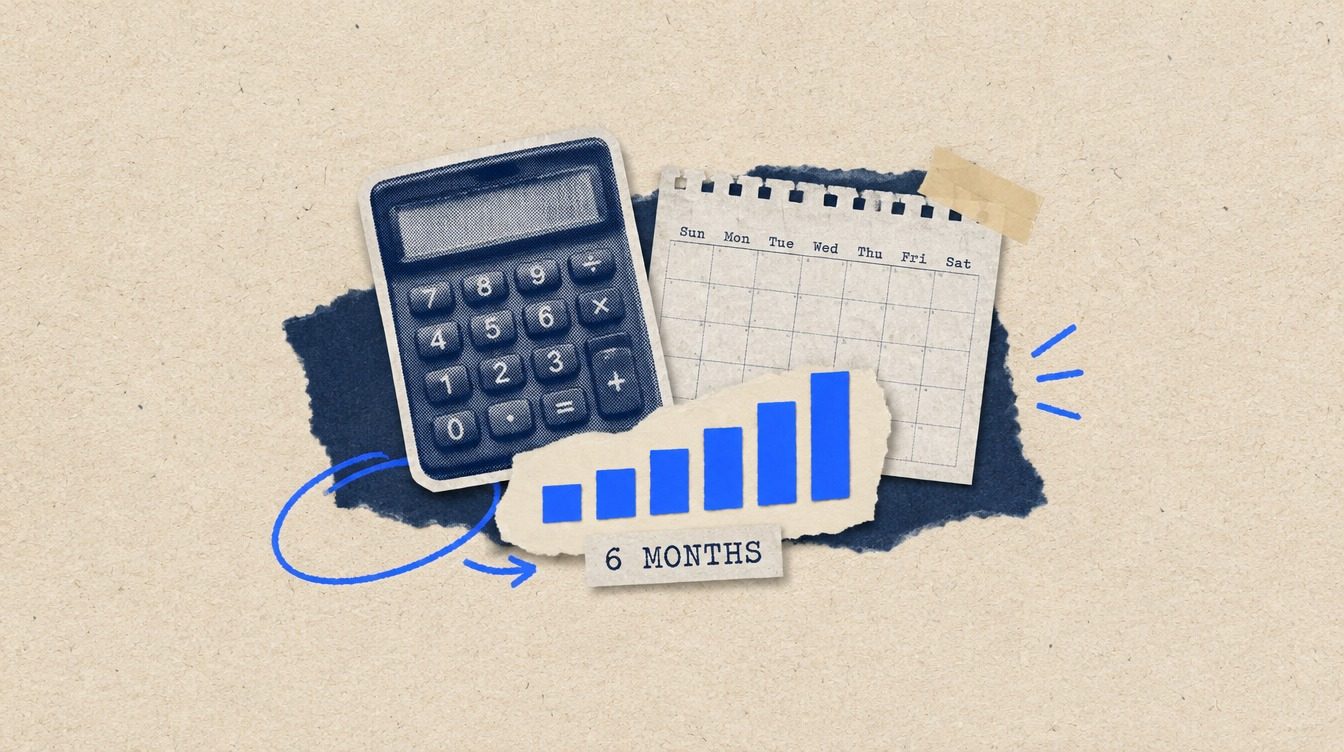
The usual rule of thumb is three to six months of expenses. It helps to know where that comes from rather than treating it as law: it's a rough guess at how long it takes to find similar work, and it shifts with how quickly your field hires. This article uses a four-to-nine month range for that reason. No authority sets that range; the sensible target simply grows with how hard your income would be to replace. Treat the numbers here as sums to run on your own situation, not rules handed down from above.
Work out your real monthly floor first
The most common mistake is aiming to cover your take-home pay. You don't need to replace your income; you need to cover the months when none is coming in, and those are usually very different numbers.
Add up only what really has to be paid if you had no job next month:
- Rent or mortgage, council tax, and any service charge
- Utilities, broadband, and the phone line you'd need to job-hunt
- Food, household basics, and essential travel
- Insurance and any minimum debt repayments
- Childcare or care costs you can't pause
Leave out everything optional: subscriptions, holidays, meals out, the gym. You might not cut all of it in practice, but your cushion should be sized for the version of your life where you did. For most households the essential floor comes out well below total spending, often around two-thirds, though yours could be quite a way either side depending on housing costs and commitments. What matters is the knock-on effect: a six-month cushion is cheaper to build than "six months of salary" makes it sound, and you only find out by how much once you've added up your own figures.
Which target is yours
Where you land in the four-to-nine month range depends on two things: how quickly your income could stop, and how long it would take to replace.
- Four to five months if you're salaried, in a sector that's still hiring steadily, with a notice period and skills that show up in current job adverts.
- Six months if you're salaried but in a role, sector or area where hiring has clearly slowed, or where you'd probably take a pay cut to move.
- Eight to nine months if your income is contract, commission-heavy or self-employed, if yours is the only income in the house, or if your role scores high in the AI exposure data.
If you're between two, go with the higher one. Having too much cushion costs you a little interest. Having too little costs you your negotiating position, which is exactly what you need most when you're job-hunting.
Where to keep it
Keep it easy to reach, separate and boring. Easy to reach means you can get at it within days without a penalty or having to sell anything, so an easy-access savings account rather than a notice account, and not investments you'd have to sell at whatever the market's doing that month. Separate means a different account from your current account, so it doesn't quietly get spent. Boring means you're not trying to make this money work hard. Its job is just to be there.
Then make the saving automatic. A standing order that goes out on payday, before you've even seen the balance, beats good intentions by a mile. Put any windfalls (a bonus, a tax refund, money from selling something) straight in until you reach the target.
Part 2: A second income stream you can scale
A cash cushion buys you time; a second income can keep buying it. Savings are a fixed amount that only goes down once you start spending them, while an income can be turned up.
What "scalable" actually rules out
A lot of side income isn't really a backup plan. If you can't expand it when you suddenly have forty spare hours a week, it's a hobby that happens to pay. The test is simple: if I lost my job on Friday, could this be three times bigger by the end of the month?
- Things that scale well include freelance work in a skill you already have, consulting, contract project work, and anything where the only limit is your available hours.
- Things that scale badly include one-off sales of stuff you own, most "passive income" that needs an audience you haven't built yet, and anything capped by a platform or by one client's budget.
Build it before you need it
The reason to start now, while you're employed and under no pressure, is that the slow parts come first. Setting up, finding your first two or three clients and getting some reviews takes weeks or months. Doing all that while you've still got a salary means the channel already exists and has a track record, so you're scaling it up rather than starting from nothing.
It also means you can be choosy about your rate. Someone building a side income from a secure position prices very differently from someone who needs money this month, and clients can tell.
Pick a skill you already have rather than a brand-new one. Start Freelancing With Skills You Already Have covers how to narrow it into something you can sell and land your first client without losing every evening.
Part 3: Know your trigger points in advance
Decide now what would make you act, because you won't think clearly about it later. Writing your triggers down while nothing's wrong takes the judgement call out of a stressful moment, and it stops that very human habit of explaining away each warning sign on its own.
Common ones to watch for:
- Your team shrinks and the gaps aren't filled
- Your manager starts routing your main tasks through an AI tool instead of you
- A performance review mentions "efficiency" or "restructuring" for the first time
- Budget for contractors, training or travel gets cut with no date for bringing it back
- Recruiters stop getting in touch, or the roles they contact you about have noticeably changed
- The exposure data for your industry gets revised upwards
What to do when one goes off
One signal is noise. Two in the same quarter is a pattern. Write your response down in advance so you just follow it:
- Within a week, update your CV and profile while your recent work is still fresh in your mind, and check your essential monthly floor against your current bills.
- Within a month, increase the standing order into your cushion, and take on one more piece of freelance work than usual, just to prove the channel still brings in work.
- Within a quarter, have three conversations with people outside your employer: a recruiter, a former colleague, and someone doing the job you'd move into.
None of that means quitting, and your employer won't see any of it. That's the idea: run the plan early and quietly while it's cheap, rather than late and in a panic when it isn't.
 Income backup plan checklist
0 of 6 done
Frequently asked questions
How many months of expenses should I have saved in 2026?
Four to nine months of essential expenses, depending on how stable your income is. Four to five months suits salaried work in a sector that's still hiring. Six months fits a role where hiring has slowed or a move would mean a pay cut. Eight to nine months is the realistic target for contract, commission-based or self-employed income, single-earner households, and roles that score high for AI exposure. The old three-to-six month rule was written for a faster-moving job market than the current one.
Is the target based on my salary or my spending?
Your spending, and only the essential part of it. You aren't replacing your income, you're covering the months where none arrives. Count housing, utilities, food, insurance, minimum debt repayments, essential travel and any care costs you can't pause. Leave out subscriptions, holidays and meals out. That essential floor is usually 55–75% of normal spending, which makes the target meaningfully smaller than "six months of salary".
Should I pay off debt first or build the emergency fund first?
The usual sequencing is a small starter cushion first, enough to cover one month of essentials so an unexpected bill doesn't put you straight back onto credit, then clear high-interest debt, then build the full cushion. High-interest debt typically costs more than savings earn, so carrying it while over-saving is expensive. Where exactly that line falls depends on your interest rates and your job security, so this is worth checking against your own numbers or with a qualified adviser.
Where should I keep an emergency fund?
Somewhere liquid, separate and dull. Liquid means reachable within days with no penalty, an easy-access savings account rather than a notice account or investments you'd have to sell at whatever price the market offers that week. Separate means not your current account, so it doesn't get absorbed by ordinary spending. The fund's job is availability, not return.
Do I still need cash savings if I have a second income stream?
Yes, and they do different jobs. Savings are certain but finite, and they only ever go down once you start drawing on them. An income channel can be scaled up but takes weeks or months to grow. The cushion covers exactly that gap: it funds the period while you're expanding the second stream, so you're never forced to accept bad rates or a bad job offer because rent is due.
How long does it realistically take to build?
Saving 10% of take-home pay against an essential floor of roughly two-thirds of your spending gets most people to six months of cover in around three to four years. Redirecting windfalls (bonuses, tax refunds, one-off sales) is what actually compresses that timeline, often by a year or more. If that sounds slow, note that the first month of cover is the one that changes your decision-making most, and it arrives early.
Where to go next
- Start Freelancing With Skills You Already Have
- Reskilling Paths Actually Worth Your Time
- Which Jobs Are Most Exposed to AI
- AI side hustles that actually work
- What if your income halved tomorrow?