Search for "backup power" and most of what comes up is trying to sell you the biggest box with the most sockets. There's a better question to ask first: what would I actually need to keep running, and for how long? This guide answers that with some simple arithmetic before you spend anything. For what a long outage looks like hour by hour, start with what if the power went off for 48 hours?.
Work out your own watts and watt-hours first. For a lot of households the honest answer is a torch, a radio and a power bank, with no battery box at all. A power station (a big battery with sockets on it) earns its place for specific reasons: someone's medical equipment, a home office you can't afford to lose, or wanting the fridge running the whole time. Plug-in solar, however handy on ordinary days, won't do any of that.
Before you buy anything
Two things matter more than any kit. First, 105 is the free number to report a power cut, and it puts you through to your network operator rather than the company that sends your bill. Second, if anyone at home relies on electricity for medical or mobility equipment, sign up to the Priority Services Register, a free service that tells your network operator you need extra help, and talk to your care team about a plan. The Met Office and GOV.UK's Prepare site both say the same.
Then think about how long outages last. Most are short, but not all. During Storm Arwen in November 2021, Ofgem found that while 83 per cent of the roughly one million customers affected were back on within 24 hours, nearly 4,000 were off for more than a week. So plan for a few hours, and make sure the plan can stretch to two days without much extra effort.
The options, honestly
- A torch, a radio and a power bank are cheap and cover phones, light and news. Most households don't need a battery box for the first day or so.
- A portable power station is a battery with sockets. It's silent, gives off no fumes, is safe indoors, and recharges from the mains or a solar panel. It's limited by its capacity: it'll run small things for a long time or bigger things for a short time. It's worth having if you need power for medical equipment, a work setup, or a fridge that runs throughout.
- A petrol or gas generator gives you far more power for your money, but it needs fuel and a plan for when that runs out, and it must only ever be run outdoors. The NHS says not to run engines in enclosed spaces such as garages because of carbon monoxide, which you can't see or smell. Keep it well away from windows, doors and air bricks, and fit a carbon monoxide alarm; the UK Health Security Agency calls one the single most important thing you can do.
- Rooftop solar with a battery is a different decision altogether. It's a long-term investment that lowers your bills, with backup in a power cut as a possible bonus, and it isn't the same thing as plug-in solar (more below).
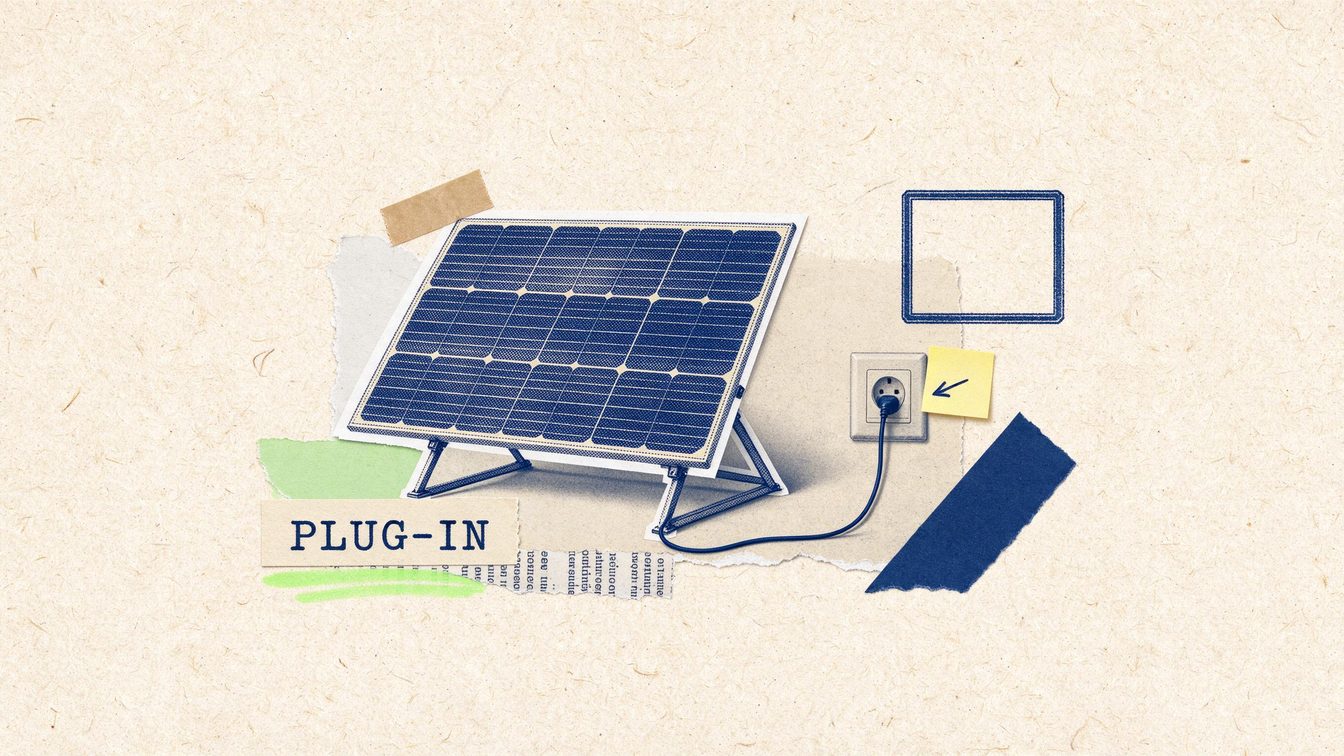
Plug-in solar is not backup power. The kits that became legal in Britain in August 2026 are designed to switch off when the grid does, and they can't include a battery. They cut bills on ordinary days, and our plug-in solar guide covers what they save and the rules. Ordinary rooftop solar without a battery also switches off in a power cut, so if backup is part of the reason you're buying, ask the installer directly.
The sums: watts and watt-hours
Two different numbers matter here, and mixing them up is the most common mistake.
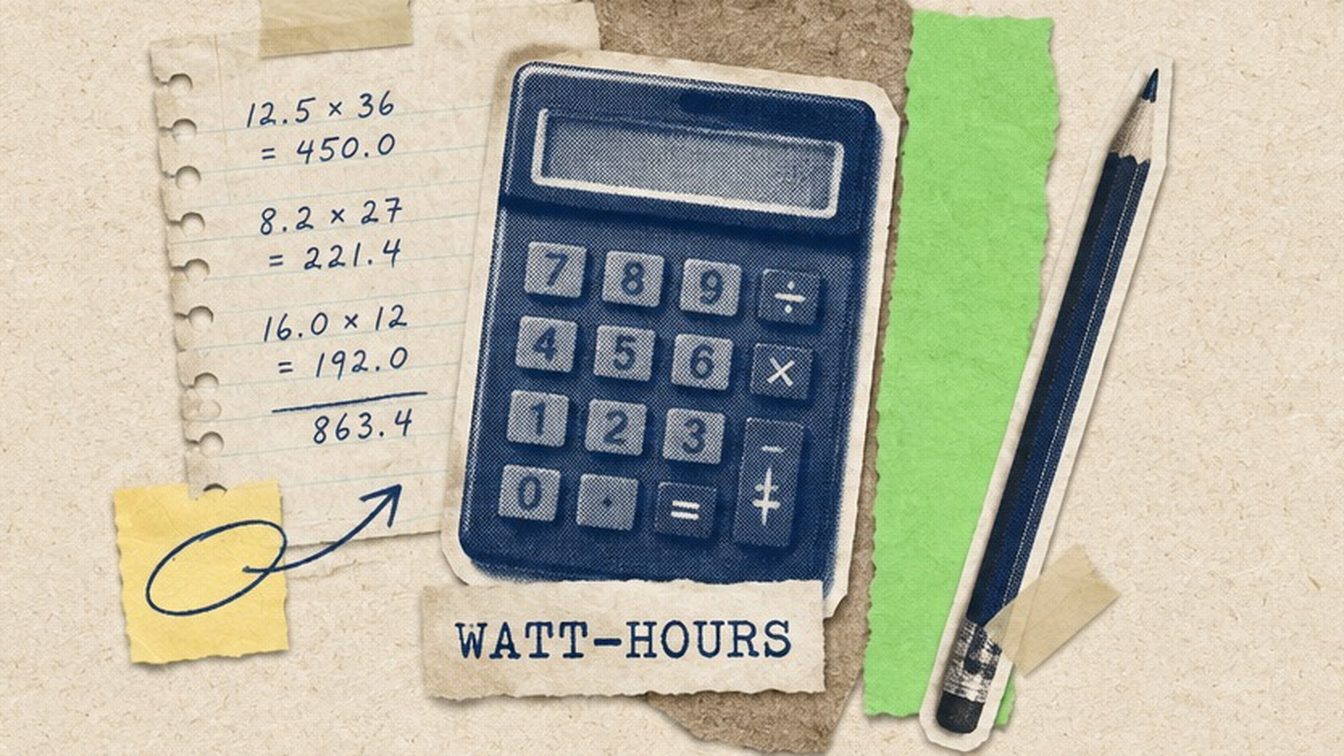
- Watts (W) is how much power something draws at any moment. It decides whether a power station can run it at all. Anything with a motor, like a fridge compressor, draws extra for a moment when it starts up, so check the maker's surge rating.
- Watt-hours (Wh) is watts multiplied by hours. It decides how long the battery lasts, and a power station's capacity is given in Wh.
Typical figures vary a lot between models, so check the label on yours. Roughly: a router and modem use about 10 to 20 W; charging a phone or laptop takes a few tens of watts; an LED bulb is 5 to 10 W; a CPAP machine is about 30 to 60 W (check yours); and a fridge-freezer draws a hundred watts or so while its compressor runs. An electric heater pulls 1,000 to 3,000 W, which is why it's the first thing to leave off the list.
A worked example, using your energy label
The most useful number on a fridge isn't its wattage but its energy label, which gives kilowatt-hours a year. Divide by 365 for the daily figure. Here's an example 24 hours, with our own assumptions marked:
- A fridge-freezer labelled 250 kWh a year uses about 685 Wh a day.
- A router at 15 W all day uses 360 Wh.
- Phones: two full charges each for two phones, at roughly 15 Wh a charge, comes to about 60 Wh.
- Lights: three LED bulbs at 8 W for five hours use 120 Wh.
That's about 1,225 Wh a day. A 1,000 Wh power station wouldn't quite manage all of it, and some energy is always lost in the conversion, so check the maker's usable figure. Two things jump out. The router is 30 per cent of the total, and as our internet-outage guide explains, it may have nothing to connect to in a widespread cut. Leave it out and the day drops to about 865 Wh. And the fridge is over half of it, yet the Food Standards Agency's figures show that a closed fridge and a full freezer already get you through the first day if you eat in the right order (see the 48-hour guide).
Can solar recharge it?
A folding panel can top up a power station, but a British autumn or winter is exactly when you'd need it and when it gives the least. For a rough idea, here's our own arithmetic on the Energy Saving Trust's estimate that an 800 W plug-in kit facing south, unshaded and tilted, makes about 700 kWh a year. That's roughly 875 kWh per kilowatt of panel per year. A 200 W panel would make about 175 kWh a year, or about half a kilowatt-hour a day on average across the year, and much less in winter or if it isn't pointed well. So a single portable panel helps over days rather than hours, and for a 48-hour winter outage you should plan around the battery alone.
Whole-home solar and battery
This is a different purchase from backup power. The Energy Saving Trust puts the average cost of a rooftop solar system at around £7,600. If you're thinking about one, get at least two quotes. Ask specifically whether it can keep your home running in a power cut (many grid-tied systems can't, because they're designed to shut down when the grid fails) and how big the battery is, and check which circuits it would keep going, since many only back up selected ones. We don't quote a payback period, because it depends entirely on your usage, your roof and prices at the time.
A realistic first build, in order
- Write down 105 and your key numbers on paper, and look at the Priority Services Register if it applies to you.
- Get the cheap kit first: a torch each, a battery or wind-up radio, and a charged power bank.
- Do the sums for what you'd really want to keep running, using the energy-label method.
- Decide whether you need a battery at all. If you do, choose by watt-hours for that list, with some headroom for start-up surges, not by the biggest number on the box.
- Only then think about solar to recharge it, bearing in mind how little a single panel adds in winter. A generator is a separate choice with its own safety rules.
 Backup power starter checklist
0 of 9 done
The two-futures view
If the grid stays reliable, a small power bank, a torch and a few minutes of arithmetic cost you almost nothing. If it doesn't, the same arithmetic tells you exactly what a bigger setup would need to do, before a bad week forces your hand. Either way the sums are free, and they stop you paying for capacity you don't need.
What if the power went off for 48 hours?
This guide is about sizing a setup. The companion piece is the scenario: what actually stops hour by hour, what to eat first, and the cheap kit that covers most of it.
Read itFrequently asked questions
What size power station do I need to run a fridge?
Size it on watt-hours, not the headline wattage. Look at your fridge-freezer's energy label: a label of 250 kWh a year is about 685 Wh a day. The station also needs enough surge headroom for the compressor starting, so check the maker's surge rating, and allow for some energy lost in conversion. Also remember the Food Standards Agency says a closed fridge stays cold for about four hours and a full freezer for up to 48.
Do I actually need a battery power station?
Not necessarily. A torch, a radio and a charged power bank cover light, information and phones cheaply, and a closed fridge and full freezer last through the first day or so if you eat in the right order. A power station makes sense if someone relies on medical equipment, you can't afford to lose a home office, or you want the fridge running throughout.
Generator or power station: which first?
For most households a power station, if you need one at all, because it's silent and safe indoors. A generator gives more power per pound but must only be run outdoors, away from windows, doors and air bricks, because of carbon monoxide, and needs stored fuel. Whichever you choose, fit a carbon monoxide alarm.
Will my rooftop solar keep the house running in a power cut?
Not on its own. A grid-tied system without a battery shuts down when the grid fails, as a safety feature. Keeping power during an outage needs battery storage and an inverter set up to do it. If backup is part of why you're buying, ask installers specifically, and which circuits would stay powered.
How long do power cuts last?
Most are short, but some aren't. In Storm Arwen in November 2021, Ofgem found that 83 per cent of the customers affected were reconnected within 24 hours, but nearly 4,000 were off for more than a week. Plan for a few hours and make sure the plan stretches to two days.
Is it safe to run a power station indoors?
Battery power stations produce no exhaust and are designed for indoor use, which is their main advantage over a generator. Follow the maker's guidance on ventilation and clearances. Petrol and gas generators must never be run indoors, in a garage or near open windows or vents.
Is whole-home solar with a battery worth it for outages?
It's a different decision: a multi-year investment that lowers your bills, with backup as a possible side benefit. The Energy Saving Trust puts the average rooftop system at around £7,600. Get at least two quotes, ask whether it can power your home in a cut, what the battery capacity is and which circuits it covers, and don't rely on a quoted payback period without checking the assumptions.
Where to go next
- What if the power went off for 48 hours?: what actually stops, hour by hour, and what to eat first.
- Plug-in solar is now legal in Britain. Is it worth it for your home?: what it saves on ordinary days.
- How long could you feed your household?: the same planning for food and water.
- What if the internet went down for seven days?: why a digital landline stops working in a power cut.
Sources & methodology
- Fridge (about four hours) and freezer (48 hours full, 24 half full) timings: Food Standards Agency, Food safety in a power cut.
- 105, the Priority Services Register and what to do in a cut: Met Office, GOV.UK Prepare and thepsr.co.uk.
- Storm Arwen (83 per cent reconnected within 24 hours; nearly 4,000 customers off for more than a week): Ofgem, Storm Arwen report.
- Carbon monoxide and generators: NHS and UK Health Security Agency.
- The estimate of about 700 kWh a year from an 800 W kit and the average rooftop solar cost of around £7,600: Energy Saving Trust, plug-in solar panels.
Appliance wattages are typical ranges that vary widely; check your own labels. The worked example (about 1,225 Wh a day, the router's 30 per cent share) and the solar estimate (about 175 kWh a year from a 200 W panel, about half a kilowatt-hour a day) are our own arithmetic on stated assumptions, not measurements or forecasts. No product has been tested by What If Hub for this article, and What If Hub earns no commission from anything mentioned. See the commercial policy.
Updated 30 September 2026: rewritten. We removed an outage-duration statistic, a solar payback figure and a "700–1,200W" load figure that we could not source or that didn't add up, corrected the source for the fridge and freezer timings, and aligned the advice with our 48-hour power cut guide.