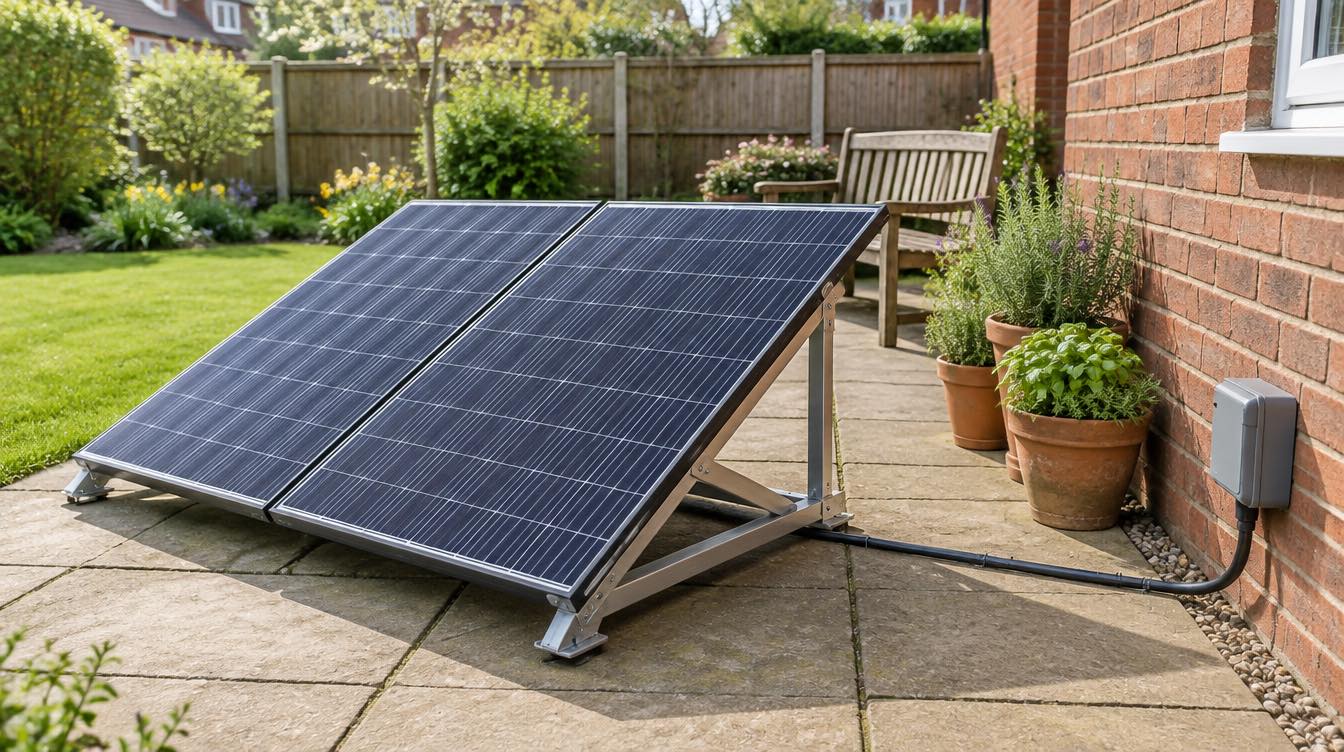
Since 27 August 2026 you can buy a small solar kit, stand it in the garden or fix it to a balcony, and plug it into an ordinary wall socket. Germany has had them for years. Until this summer they weren't legal here.
If you have an unshaded, south-facing spot and someone's home during the day, plug-in solar is a modest, sensible saving: roughly £70 to £100 a year on the Energy Saving Trust's estimate, from a kit costing from around £450. It won't run your house, you won't normally be paid for the power you don't use, and (the part most coverage skips) it switches off in a power cut.
What actually changed
The regulations that came into force on 27 August 2026 changed the rules on plugs and sockets and on how small generators connect to the electricity network, so a compliant solar kit can now feed power into your home through a normal socket. The change covers England, Scotland and Wales. Northern Ireland has its own regulations, and plug-in solar isn't legal to use there yet.
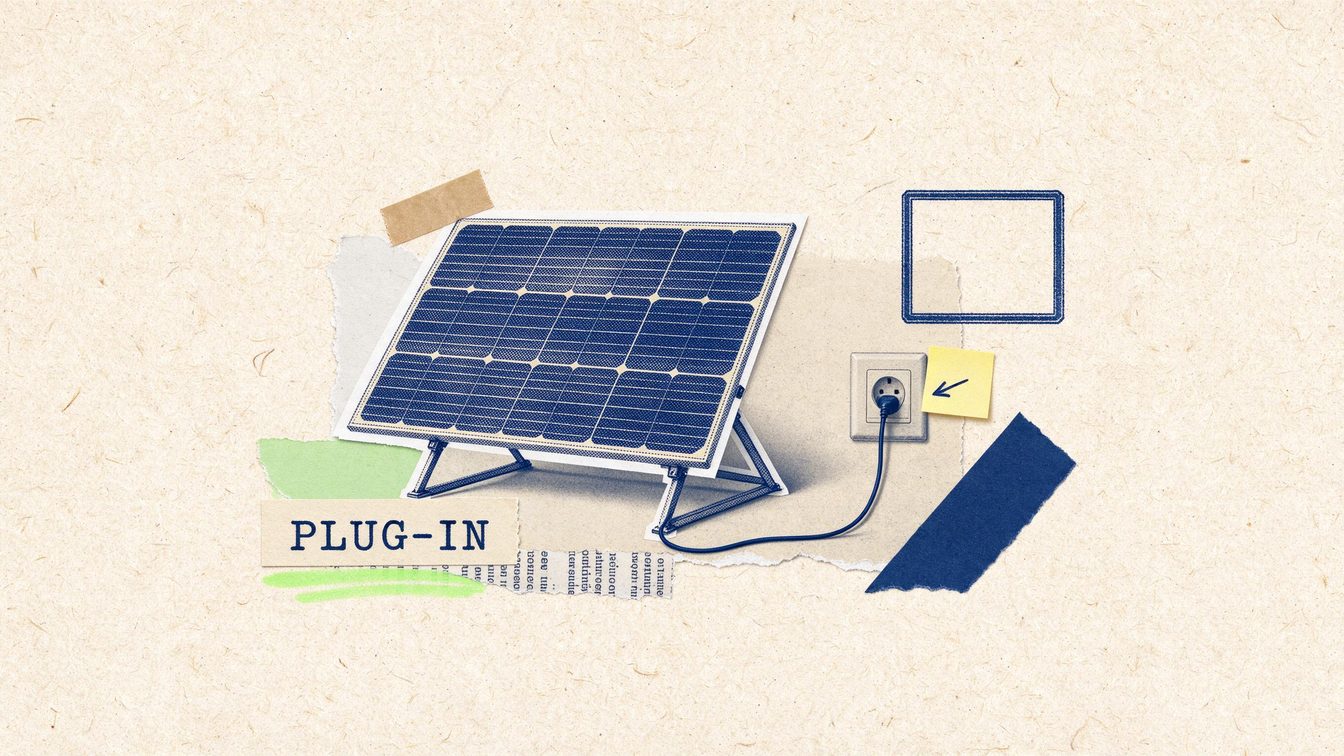
"Compliant" is carrying a lot of weight in that sentence. A legal kit has to meet the UK's product specification, top out at 800W, have no built-in battery, and be listed on the Energy Networks Association's register of approved devices. The government says the UK specification is stricter than Germany's. Retailers including Currys, Argos, B&Q, Screwfix, Wickes and Amazon have said they'll stock kits, but the shop you buy from doesn't guarantee anything. The register does, and there's more on that below.
How it works
A kit is one or two solar panels, a small box called a microinverter, some mounting brackets and a cable with a plug. The panels make direct current, the microinverter turns it into the alternating current your house runs on, and the plug feeds it into your home wiring.
After that it all happens by itself. Whatever's running in the house at the time (the fridge, the router, a laptop on charge, the TV) uses the solar power first. If you need more than the panels are making, the rest comes from the grid as usual. If they're making more than you're using, the surplus flows out to the grid.
The government's example is that a kit at full output can run a typical fridge, television, Wi-Fi router, laptop and phone charger all at once. It won't run a kettle, an oven or a washing machine by itself, since those draw far more than 800W, but it still takes a slice off what they use while it's generating.
What it saves, honestly
The Energy Saving Trust modelled an 800W kit facing south in Manchester, tilted at 30 degrees, with no shading, in a home using an average 2,500 kWh a year at 24.7p per kWh. It worked out at around 700 kWh of electricity a year, and savings of:
- about £100 a year if someone's home during the day
- about £70 a year if the house is empty during the day
The government quotes "up to £110 a year". I'd treat the Energy Saving Trust's range as the realistic one and the government's number as the ceiling.
Why are the savings lower than the output suggests? If every one of those 700 kWh replaced electricity you'd otherwise have bought at 24.7p, it would be worth about £173 a year. The estimates come in lower because a good chunk is generated while the house isn't using much, and that chunk goes to the grid, usually for nothing.
The payback arithmetic. On the Energy Saving Trust's own figures, with a kit from around £450 and savings of £70 to £100 a year, the purchase price comes back in roughly four and a half to six and a half years. That's our division, not a forecast. It assumes one of the cheapest kits, a sunny unshaded spot and today's electricity price. A pricier kit, some shade or an east-facing wall stretches it out; higher electricity prices bring it in.
Will I get paid for what I don't use?
Not normally. Getting paid for exported electricity usually means the Smart Export Guarantee, and most energy suppliers want an MCS certificate for that, which a self-installed plug-in kit doesn't have. The Energy Saving Trust notes that some suppliers may offer an export tariff without one, so it's worth asking yours. Just don't build your sums around it.
How to get more out of it
Because the power you don't use is given away, the saving comes from using it while it's being made. On sunny days, run the dishwasher or washing machine in the middle of the day instead of the evening, and charge laptops, power tools and e-bike batteries at lunchtime. Each of those shifts a little more of your use into the solar window. None of it is dramatic, but together it's the difference between the bottom and the top of that £70 to £100 range.
The rules you have to follow
These aren't optional. Most come straight from the regulations and the Energy Saving Trust's checklist, which it wrote with the Department for Energy Security and Net Zero.
- Check the register before you buy. The kit has to appear on the ENA Connect Direct device register for plug-in solar. If a model isn't on the list, it isn't a compliant kit, wherever it's sold.
- One device per home. A device can include more than one panel, but you can't plug in two kits or link devices together. The government has said it's looking at allowing more than one in future.
- Straight into the wall. No extension leads, multi-way adaptors, travel adaptors or altered plugs. The socket has to be on a circuit that doesn't also supply lighting or hard-wired appliances such as a boiler or cooker.
- Outdoor sockets need an electrician. If you're plugging in outside, the socket has to be weatherproof (the Energy Saving Trust says at least IP65) and fitted by a qualified electrician.
- No built-in battery. Kits with integrated battery storage aren't covered by the current rules.
- Register it as soon as you have it. Registration is a legal requirement, on the UK Plug-in Solar Registration website, run by the Energy Networks Association. It says to register once you have the device and know where it'll go, so do it before you switch it on. You'll need your name, postcode and the make and model. You get an on-screen confirmation but no email, so take a screenshot.
Permission comes first
If you rent, lease, or live in a managed building, get permission before you buy, not after. Landlords, freeholders and building managers can say no, and if you install without permission you may have to take it down and pay for any damage. Leaseholders should check their lease for restrictions on fixing things to balconies, external walls or railings. Our guide for renters and flat owners covers what to ask and how.
On planning: in England, a permitted development right now covers houses and blocks of flats, with conditions, one of which is that plug-in solar can't go on a wooden wall, balcony or timber-clad exterior (Planning Portal). In Scotland and Wales, check what applies where you live. If your home is listed or in a conservation area, speak to the council first. And ask your home insurer whether your policy covers outdoor installations.
Flats with timber balconies, external cladding or recent work on the outside walls need extra care because of fire safety. Talk to the building manager before you do anything.
Is your wiring up to it?
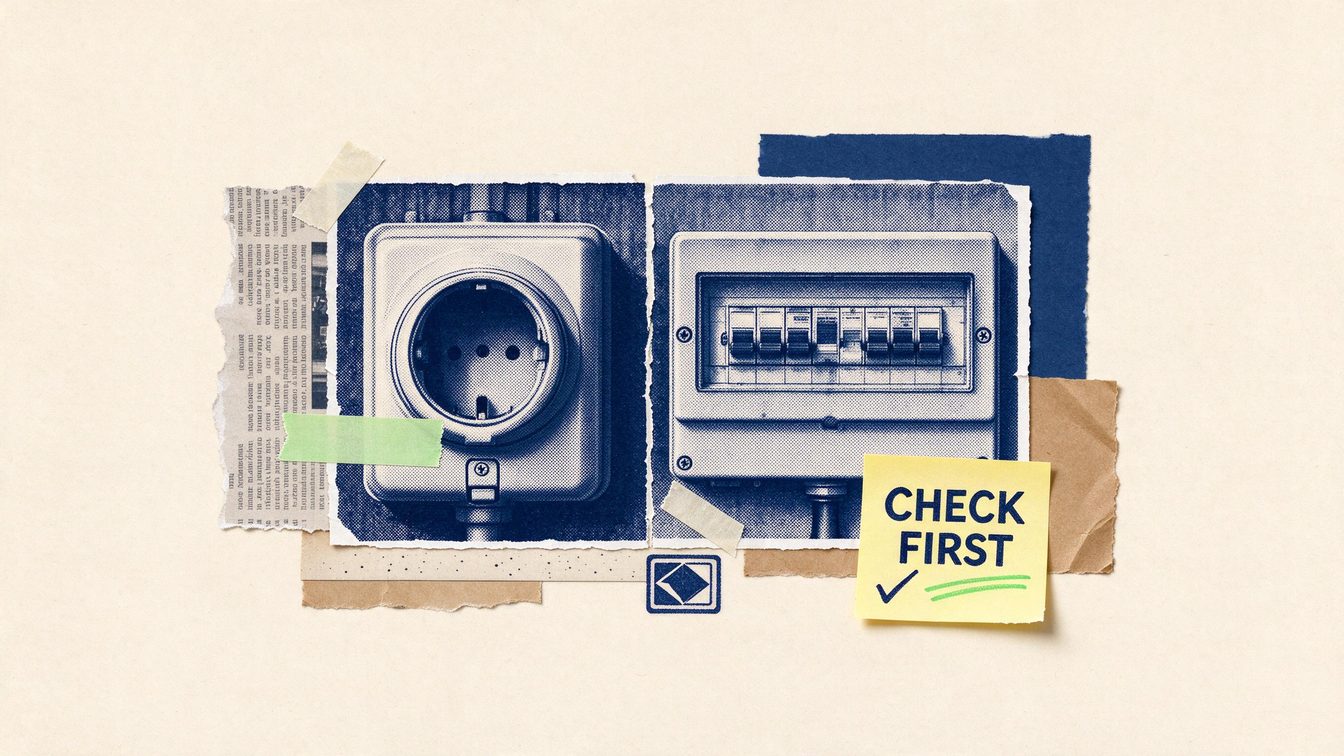
The government says the rules followed rigorous, independent safety testing showing compliant kits work with UK wiring. Electrical Safety First, the UK charity for domestic electrical safety, agrees they're legal but says there are unresolved concerns about how plug-in solar affects certain RCDs (the safety switches in your fuse box), and that "plug-in" doesn't mean no checks. It recommends getting an electrician registered with a competent persons scheme to assess your installation before you buy, especially in an older home, and says homes with Type AC RCDs shouldn't use plug-in solar without first upgrading to at least a Type A bidirectional RCD. We explain how to check in the electrical checks to make first.
Speak to a qualified electrician first if your fuse box still has old rewireable fuses, if you're not sure about the state of your wiring, if you need a new socket, or if the panels in the kit add up to more than 960W between them. That last one can happen legally: a kit with two 450W panels still only delivers 800W, because the microinverter caps the output, which manufacturers call "clipping". You can find a qualified electrician through TrustMark.
Once it's running, test your consumer unit's protection every six months by pressing its test button during the day while the panels are generating. If it doesn't trip, unplug the kit and call an electrician.
Where it goes
South-facing and unshaded is best. East- or west-facing still works, making more in the morning or the afternoon respectively, but less overall. North-facing or heavily shaded isn't worth it.
The frame matters more than people expect. Panels are typically about two metres by one, roughly the size of a door, and they act like a sail in a gale. Use a proper mounting frame, fix it to something solid, and don't attach panels to a wooden fence without professional advice. If it's going on a garage or shed roof, make sure the roof can take the weight. The Energy Saving Trust notes that the kits on sale in the UK at the moment generally suit gardens better than balconies.
Why it won't help in a power cut
This is the thing to understand before you buy one for the wrong reason. Plug-in solar is designed to switch off when the grid goes down. That's on purpose: a device that kept pushing power into the wiring during a cut could endanger anyone working on the lines. So on the day the power's off, the panels in your garden are off too, even in full sun.
That makes plug-in solar a tool for ordinary days: lower bills, a small hedge against price rises, and a bit of your electricity made at home. It isn't backup power. If you want to keep the fridge, router and lights going during an outage, you need a different piece of kit, usually a portable power station, which is a battery you plug appliances into directly. Our 48-hour power cut guide covers what a long outage looks like, and our backup power guide covers how to size a kit.
Who it suits, and who it doesn't
It suits homes with a sunny garden or patio and a suitable socket in reach; people whose roof can't take conventional panels, or who can't justify a full rooftop system; renters and flat owners who've got permission; and anyone who's home for a good part of the day.
It doesn't suit north-facing or heavily shaded homes, anyone who'd need an extension lead to reach a socket, households hoping to be paid for exports, or anyone buying it for power cuts. If you already have rooftop solar, check before you buy. The Energy Saving Trust says adding a plug-in kit is usually possible but to ask your original installer or an electrician. The ENA's registration site is stricter: with an existing 3.68 kW G98 system you must use a qualified installer to apply for G99 approval, and any extra generation has to be wired in, not plugged in.
 Before you buy plug-in solar
0 of 9 done
The two-futures view
The question this site keeps asking is what you can do today that helps whichever way things go, and plug-in solar only half answers it. If things go well (a stable grid, falling technology costs) it's a small, steady saving that pays for itself in a few years. If energy prices spike again, the saving grows with them, because every kWh you make yourself is one you're not buying at the new price. What it can't do is keep anything running if the grid itself goes down, so for that it needs a partner.
What if the power went off for 48 hours?
Plug-in solar switches off when the grid does. The companion piece asks what a long power cut actually looks like at home, what stops, what to eat first, and the cheap kit that covers most of it.
Read itFrequently asked questions
Is plug-in solar legal in the UK?
In England, Scotland and Wales, yes, since 27 August 2026, as long as the kit meets the UK product specification, is no more than 800W, has no built-in battery and is listed on the Energy Networks Association's device register. It isn't yet legal in Northern Ireland, which has separate regulations.
Do I need an electrician before buying plug-in solar?
Electrical Safety First recommends one: that an electrician registered with a competent persons scheme assesses your installation before you buy, particularly in an older home. It says homes with Type AC RCDs shouldn't use plug-in solar without first upgrading to at least a Type A bidirectional RCD. The government says compliant kits are compatible with UK wiring, so treat it as a sensible precaution. Our electrical checks guide explains what to look for.
How much will plug-in solar save me?
The Energy Saving Trust estimates around £100 a year if someone is home during the day and around £70 if the house is empty, for an 800W south-facing kit with no shade. The government quotes up to £110. Shade, an east- or west-facing position or lower electricity prices will reduce it.
Do I have to register plug-in solar panels?
Yes. Registration is a legal requirement, and the Energy Saving Trust says to do it before you start using the kit. Use the UK Plug-in Solar Registration website (myplugin.solar) with your name, postcode and the make and model. You get an on-screen confirmation rather than an email, so save a screenshot.
Can I sell the electricity I don't use?
Not normally. Most suppliers require an MCS certificate for Smart Export Guarantee payments, and self-installed plug-in kits don't have one. Some suppliers may offer an export tariff without it, so ask yours, but the saving mainly comes from using the power yourself while it's being generated.
Will plug-in solar work in a power cut?
No. Plug-in solar is designed to switch off when the grid goes down, so it can't keep anything running during an outage. For backup power, look at a portable power station, which is a battery you plug appliances into directly.
Can I use plug-in solar if I rent?
Yes, if your landlord agrees. Get permission before you buy, especially if you'd need to drill into walls or have an outdoor socket fitted. Leaseholders and people in managed buildings should check with the freeholder or building manager too.
Do I need planning permission for plug-in solar?
In England, a permitted development right makes it easier to install on houses. In Scotland and Wales, check the requirements for your area. If you live in a listed building or a conservation area, check with your council before installing, wherever you are.
Can I have more than one plug-in solar kit?
Not at the moment. Only one device is allowed per home, though it can be made up of more than one panel. Linking devices together is not allowed. The government has said it is looking at allowing more than one device in future.
Where to go next
- Backup power and solar: how to size it right: the companion piece, for the days plug-in solar can't help.
- What actually cuts a UK energy bill: the free and cheap fixes that usually save more than panels do.
- What if your income halved tomorrow?: why a lower energy bill matters more than it looks.
Sources & methodology
- The legal change, the 800W limit, the no-battery rule and the adaptor ban: The Plugs and Sockets etc. (Safety) and Electricity Safety, Quality and Continuity (Amendment) Regulations 2026 (SI 2026/848), in force 27 August 2026.
- Output, savings, cost, one-device rule, socket and circuit rules, IP65, 960W advice and clipping, combining with rooftop solar, power-cut behaviour, battery rule, export tariffs and siting: Energy Saving Trust, Plug-in solar panels and Plug-in solar panels: checks to make before you buy (written with DESNZ), both checked on 27 September 2026. The Energy Saving Trust's modelling assumes an 800W kit in Manchester, facing south, tilted at 30°, unshaded, in a home using 2,500 kWh a year at 24.7p/kWh.
- "Up to £110 a year", "up to 20% of an average home's electricity use", the appliance example, the comparison with Germany and the retailer list: DESNZ press release, 26 August 2026.
- Approved devices: ENA Connect Direct device register (plug-in solar). Registration: UK Plug-in Solar Registration, linked from the Energy Saving Trust's checklist.
- Export payments: Ofgem, Smart Export Guarantee.
- RCD concerns, electrician check, marketplace sellers: Electrical Safety First, plug-in solar advice. Registration wording and existing G98 systems: UK Plug-in Solar Registration. IP65, UKCA/CE, batteries, escape routes: London Fire Brigade. Planning in England: Planning Portal.
The payback range (about four and a half to six and a half years) and the £173 figure are our own arithmetic on the Energy Saving Trust's numbers: £450 ÷ £100 and £450 ÷ £70; 700 kWh × 24.7p. They are illustrations, not forecasts. No kit has been tested by What If Hub for this article, and What If Hub earns no commission from any product or retailer mentioned. Plug-in solar is new in the UK and the rules may change; this article will be updated when they do.
Updated 30 September 2026: added Electrical Safety First's advice about checking your electrics and RCD type, corrected the guidance for homes that already have rooftop solar, and clarified when to register.