Imagine a tutor who's free at eleven at night, never sighs when you ask the same question a third time, and is happy to explain photosynthesis, pension tax relief or Spanish verb endings in whatever way finally makes it click. For most of history that was something only rich families could pay for. Now there's a version of it on your phone.
It isn't hype, either. In a proper randomised trial at Harvard, students who learned from a carefully built AI tutor learned more, in less time, than students taught the same material in a good, hands-on class. There's a catch, though, and it's an important one: used the lazy way, the same technology can leave you knowing less than when you started. This guide covers both, and how to set things up so you get the good version.
Why this is genuinely exciting
The Harvard study, published in Scientific Reports in June 2025, followed 194 students on an introductory physics course. Each student learned one topic from a custom AI tutor at home and another in class, where experienced instructors used research-backed, hands-on teaching rather than a dull lecture. The researchers found students learned significantly more in less time with the AI tutor, and felt more engaged and more motivated. The median learning gain was more than double, and the median student spent 49 minutes with the tutor against a 60-minute class.
The reason they give is easy to recognise if you've ever sat in a class that moved too fast or too slow. A tutor can go at your pace and give you feedback on exactly the bit you got wrong, which is very hard for one teacher to do for a whole room.
It's worth being clear about what they actually tested, though. This wasn't someone typing questions into a chatbot. The team wrote detailed instructions for the tutor and built it to walk students through each problem one step at a time, because they found a prompt on its own couldn't reliably keep it in order. They also say they don't assume AI tutoring will always beat a good class, for example on work that needs pulling lots of ideas together.
The catch: it can also make you worse
The second study is the one I'd want everyone to read before they start. Published in PNAS in July 2025, it gave nearly a thousand secondary-school maths students in Turkey access to GPT-4 during practice sessions. One group got a plain chat window like standard ChatGPT. Another got a "tutor" version whose instructions told it not to give away the whole solution and to offer hints for common mistakes.
During practice, both groups did much better: grades went up 48% with the plain version and 127% with the tutor version. Then the AI was taken away for the test. Students who'd had the plain version scored 17% lower than students who never had AI at all. The researchers say they'd used it as a crutch. The tutor version's safeguards largely cancelled out that harm.
So the tool isn't the deciding factor; how you use it is. If the AI does the thinking, you get better homework and worse understanding. Make it hold back the answers and you get the Harvard result instead.
What turns a chatbot into a tutor
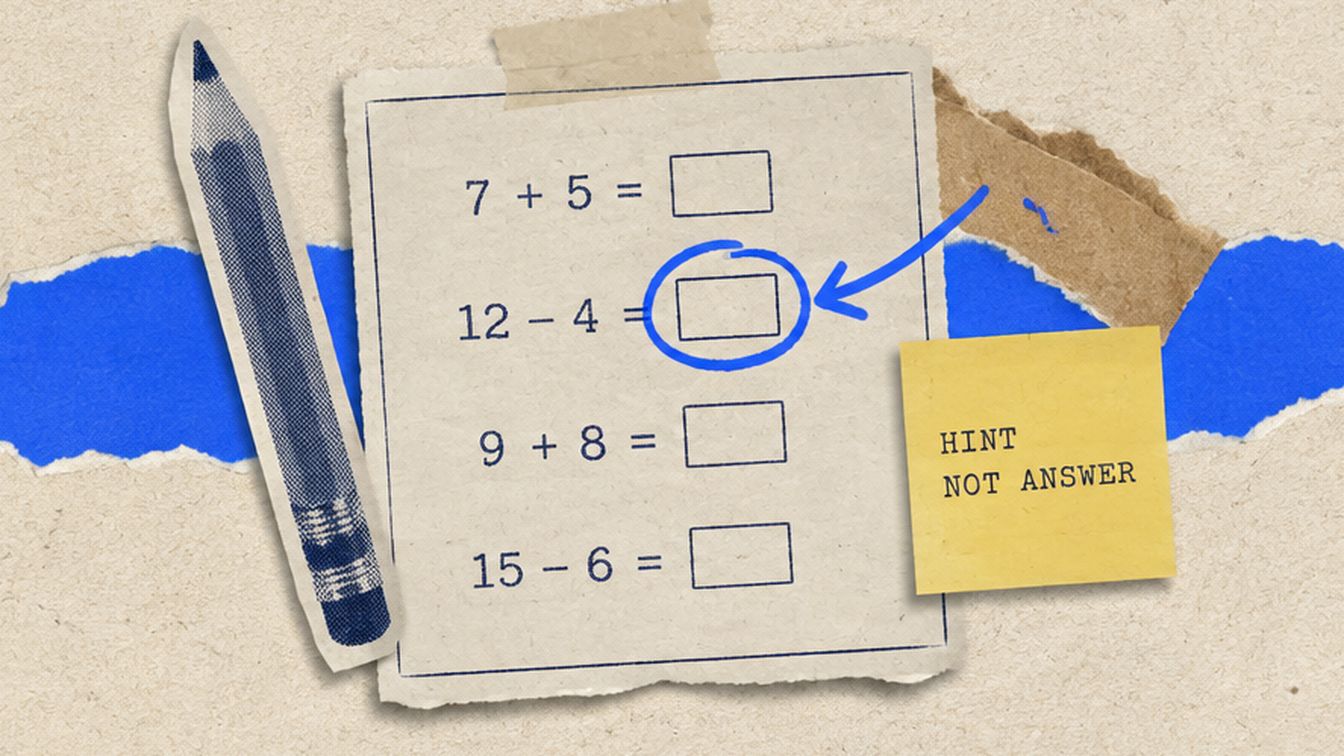
Put the two studies side by side and the recipe is fairly clear. The setups that worked made the student do the thinking, went one step at a time, and checked understanding along the way. The one that backfired just handed over answers.
- Hints, not answersA nudge to the next step
- One step at a timeSo you can't skim
- Quiz meAnswer from memory
- Explain it backIn your own words
- Ask for hints, not answers. You want a nudge towards the next step, and the full solution only after you've had a proper go.
- Go one step at a time. Long, complete explanations feel helpful but let you skim.
- Get it to quiz you. Answering a question from memory does more than rereading the explanation.
- Explain it back. Tell the AI what you think the idea is, in your own words, and ask it to pick holes.
- Practise without it too. The PNAS students who struggled were the ones who never had to stand on their own feet.
The tutor modes already built in
The big assistants have all added a learning mode that works roughly this way, so you don't need to build anything.
ChatGPT has study mode. OpenAI says it can ask questions instead of giving the answer straight away, explain things in layers, quiz you and give feedback, and work from notes, slides or a photo of a problem you upload. It's available on every plan. On the web you can type @study in the message box or go to chatgpt.com/studymode, and on the phone apps it's under the + button. It doesn't work in Temporary Chats, GPTs or Projects.
Gemini has Guided Learning, which Google launched in August 2025. Google says it breaks problems down step by step and adapts its explanations, and Gemini can also make flashcards and study guides from your materials.
Claude has a learning mode. Anthropic introduced it in April 2025 as part of Claude for Education, where it guides your reasoning with questions such as "What evidence supports your conclusion?" rather than giving answers, and says it works like a good tutor.
Menus move around between app versions, so if you can't see the option, search the provider's help pages for its current name.
Set up your own tutor in two minutes
If you'd rather not use a special mode, or your assistant doesn't have one, you can get most of the way with a good opening message. This is our own template, built around what the studies found, so adapt it to suit you:
"I want to learn [topic] properly, not just get answers. I'm a [beginner / getting there / fairly confident]. Please teach me one small step at a time. After each step, ask me a question and wait for my answer before carrying on. If I get it wrong, give me a hint rather than the answer, and only show me the full solution if I ask twice. Every so often, ask me to explain the idea back in my own words. Keep a list of what I've found hard and quiz me on it at the end."
Tell it your level honestly, and what you're aiming for, whether that's an exam, a job skill or just curiosity. OpenAI's own advice for study mode is the same: say what you already understand, what you're trying to do, and any deadline, and upload your course materials if you have them.
A study routine that works
Here's a simple weekly rhythm. It's our suggestion rather than something from the studies, but it follows the same idea of doing the work yourself.
- Learn something new in a short session with the tutor, one step at a time.
- Get quizzed on it the next day, from memory, before you look anything up.
- Explain it back and let the AI find the gaps.
- Practise on your own, with the AI closed, on a few fresh problems.
- Check it against a proper source, like your textbook, course notes or an official page, because AI can still be confidently wrong.
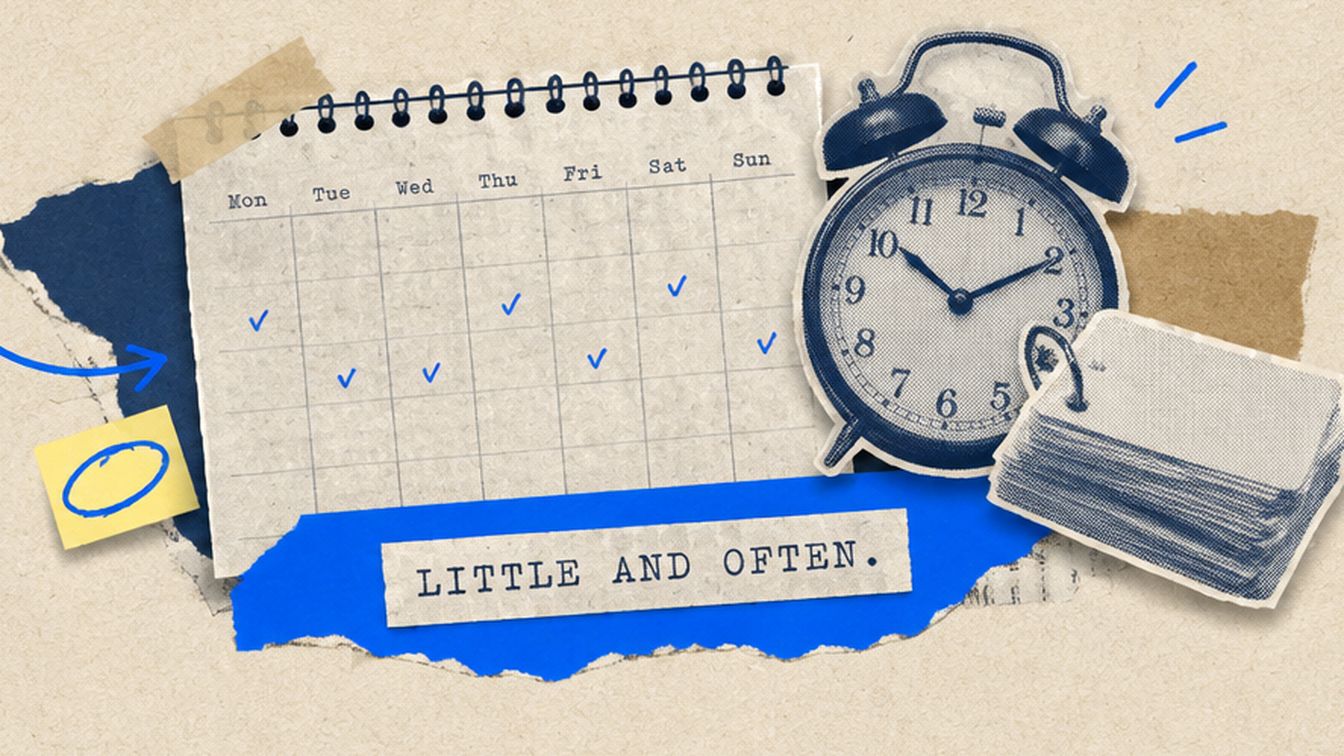
Little and often beats one heroic Sunday. Even a few short sessions a week add up quickly when every one makes you think.
What to learn first
The best candidates are things you can practise and check: maths and statistics, a programming language, a spoken language, the theory behind a qualification you're studying for, or the jargon of a field you want to move into. If you're weighing up a career move, it pairs well with our guide to reskilling paths actually worth your time, and if you want to earn from a skill, see starting freelancing with skills you already have.
It's also brilliant for the everyday stuff that nobody ever explained properly, like how a pension works, what's on your energy bill or how to read a payslip. Just check the numbers against the official source before you act on them.
Where it falls short
- It can be wrong and sound completely sure of itself. Our guide to checking an AI answer before you rely on it covers how to spot it.
- It can't replace practice. The PNAS result is the warning: if the AI always does the hard part, you won't be able to.
- It follows your school's or employer's rules, not its own. OpenAI says to follow the AI-use policies of your school, instructor or organisation for graded work.
- Be careful what you upload. Your own notes are fine; other people's personal details or your employer's confidential documents aren't. See what not to paste into an AI chatbot.
 Set up your AI tutor
0 of 8 done
The two-futures view
If AI keeps getting better, the people who'll do best are the ones who use it to get sharper rather than to skip the thinking, and a personal tutor is about the best way there is to do that. If things go the other way and your job changes or disappears, being able to pick up a new skill quickly is one of the most useful things you can have. Either way, what you learn stays in your head, whatever happens to the tools.
Reskilling paths actually worth your time
Once you've got a tutor, the next question is what to learn. This guide covers which courses and certifications actually lead somewhere.
Read itFrequently asked questions
Can AI really teach you as well as a person?
In the right setup it can do very well. A 2025 Harvard trial found students learned significantly more in less time from a carefully structured AI tutor than in a hands-on class taught by experienced instructors. The researchers built that tutor carefully and don't claim AI will always win, so treat it as a strong sign of what's possible rather than a guarantee.
Can using ChatGPT for homework make you worse at a subject?
It can. In a 2025 study of nearly a thousand maths students, those who practised with a plain ChatGPT-style assistant scored 17% lower once it was taken away than students who never used it. A tutor version designed to give hints rather than answers largely avoided that. Ask for hints and practise on your own too.
Which AI has a study or tutor mode?
ChatGPT has study mode, Gemini has Guided Learning, and Claude has a learning mode that started in Claude for Education. They all aim to guide you with questions and steps rather than hand over answers. Menu names change, so check each provider's help pages.
How do I turn on study mode in ChatGPT?
OpenAI says that on the web you can type @study in the message box or go to chatgpt.com/studymode, and on the iOS and Android apps it's under the + button. It isn't available in Temporary Chats, GPTs or Projects.
What's the best prompt to make AI act like a tutor?
Ask it to teach one small step at a time, to ask you a question after each step and wait for your answer, to give hints rather than answers when you're wrong, and to have you explain ideas back in your own words. Tell it your level and what you're aiming for.
Is it cheating to learn with AI?
Learning with it isn't cheating, but handing in its work as your own may break the rules. OpenAI says to follow the AI-use policies of your school, instructor or organisation for graded work, so check what yours allow.
Where to go next
- Reskilling paths actually worth your time: what to learn if you're planning a career move.
- How to check an AI answer before you rely on it: because a tutor can still be confidently wrong.
- What not to paste into an AI chatbot: what's safe to upload to your tutor.
- Start freelancing with skills you already have: turning what you learn into income.
Sources & methodology
All sources were read on 16 October 2026. Features and menus in the AI apps change often, so check the provider's current help page.
- Kestin, Miller and others, "AI tutoring outperforms in-class active learning: an RCT introducing a novel research-based design in an authentic educational setting", Scientific Reports, 3 June 2025: 194 Harvard physics students, learning gains, time on task, engagement and motivation, the structured design, and the authors' caveats. Nature / Scientific Reports.
- Bastani and others, "Generative AI without guardrails can harm learning: Evidence from high school mathematics", PNAS, 1 July 2025: nearly a thousand students in Turkey, the 48%, 127% and 17% figures, and how the tutor version was set up. PNAS, read via the open-access copy on PubMed Central.
- OpenAI, Using study mode in ChatGPT: what it does, availability, how to turn it on, and the advice to follow your institution's AI rules.
- Google, New Gemini app tools to help students (6 August 2025): Guided Learning, flashcards and study guides.
- Anthropic, Introducing Claude for Education (2 April 2025) and Claude for education: Learning mode and Socratic questioning.
The tutor template, the weekly routine and the suggestions on what to learn are our own, based on what the two studies found. We haven't tested any of these tools for this article, and What If Hub currently earns no commission from any provider mentioned. See the commercial policy.